dumpstool logo

Exhibit.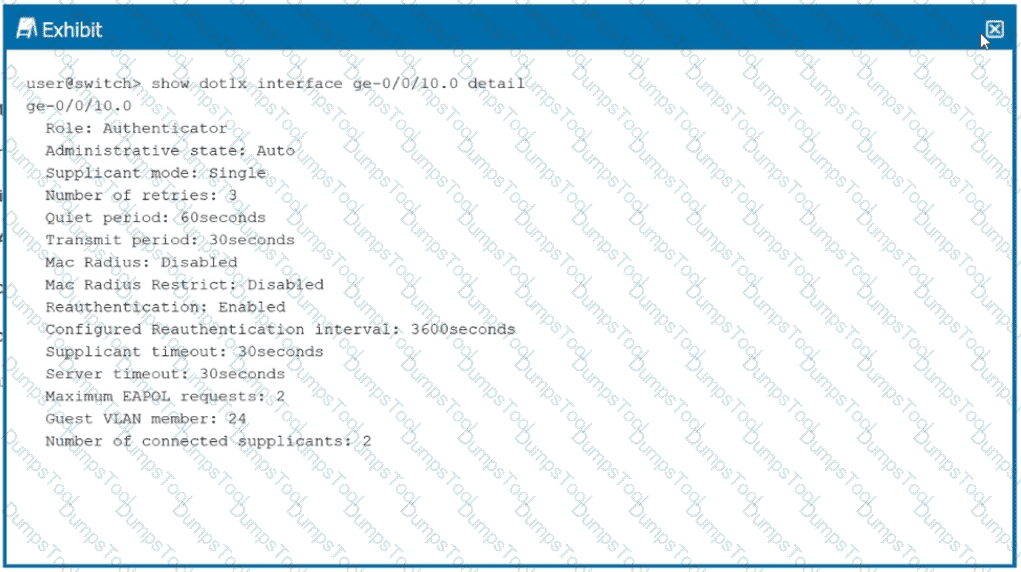
You want to limit port access to only one device at a time.
Referring to the exhibit, which configuration change will accomplish this task?
Exhibit
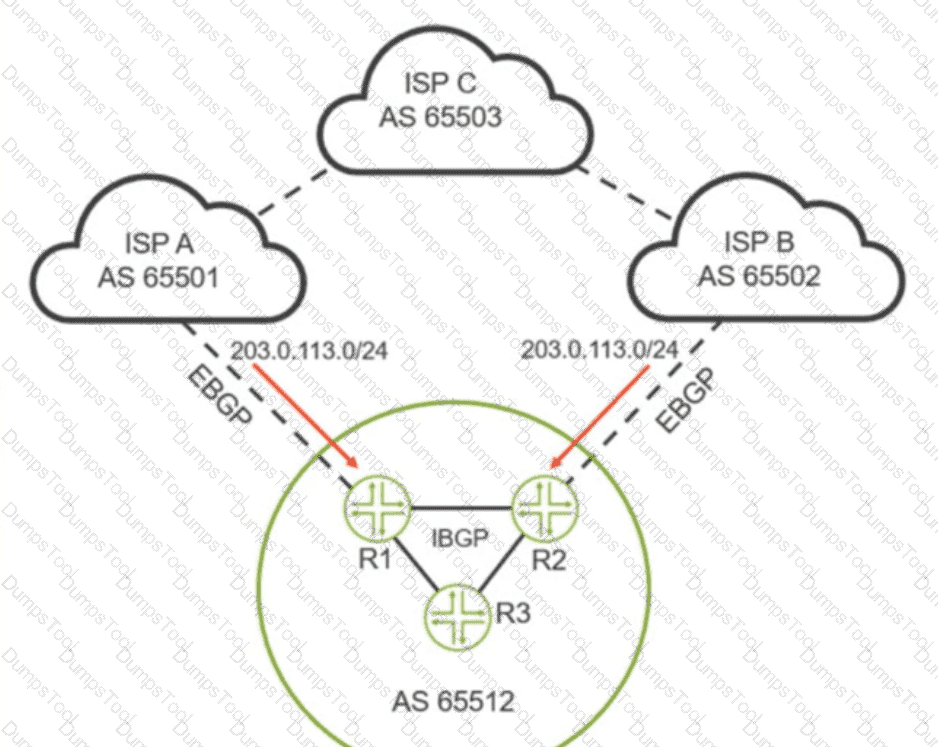
You are receiving the 203 0.113.0/24 route from both upstream ISPs You are asked to ensure that ISP A is the preferred ISP for traffic being sent to the 203.0.113.0/24 network from devices in AS 65512.
Referring to the exhibit, which two statements will accomplish this behavior? (Choose two.)
Exhibit
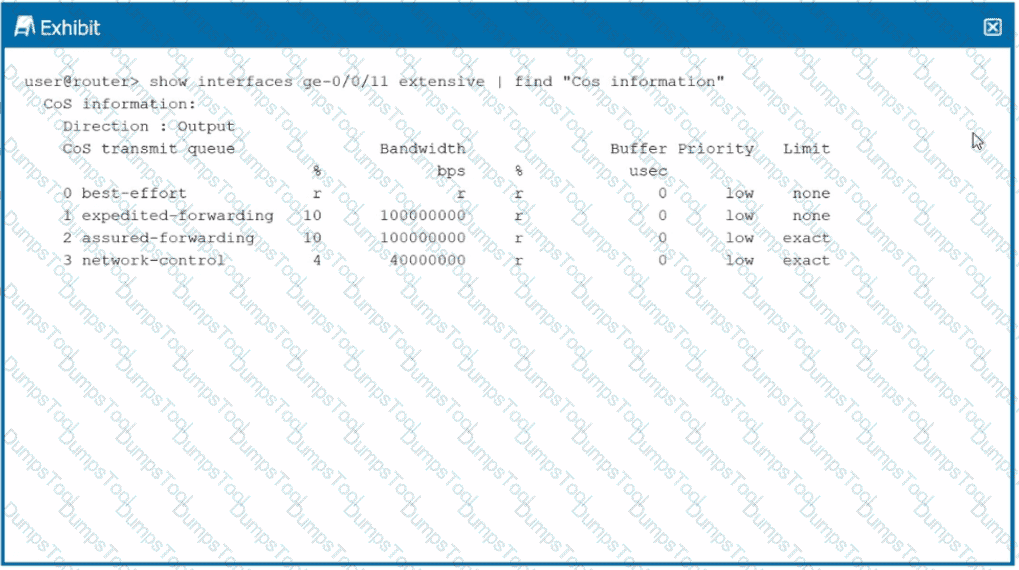
Referring to the exhibit, which two statements are correct? (Choose two.)
You are asked to configure 802.1X on an EX Series switch port that connects to a downstream switch with several devices attached. You must ensure that the first device is authenticated while all subsequent devices are permitted.
What will accomplish this request?
You are adding a new QFX Series switch to an EVPN-VXLAN IP fabric.
In this scenario, which two statements are correct? (Choose two.)
Exhibit
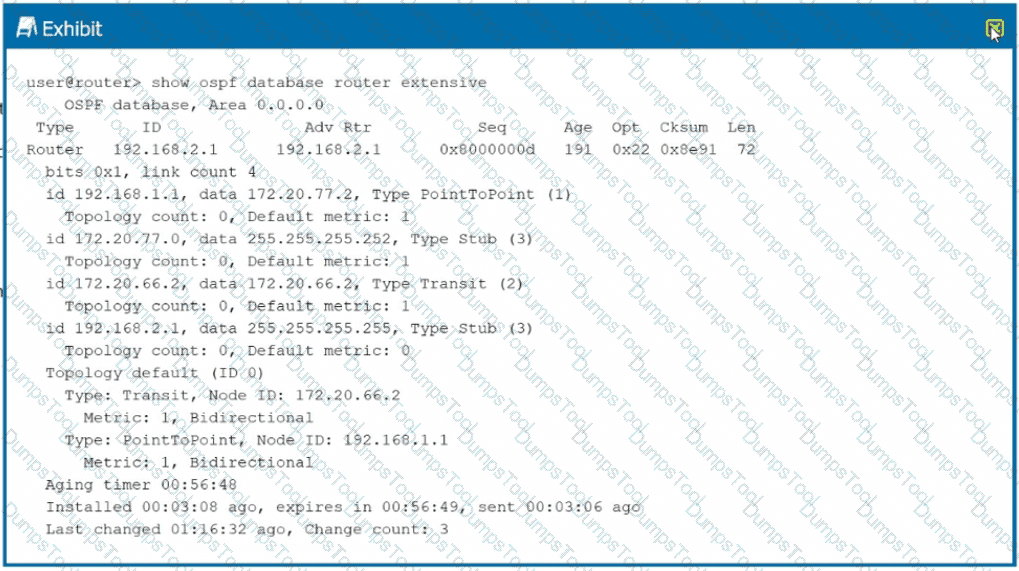
What is the OSPF router type shown in the exhibit for router 192.168.2.1?
You have two multicast receivers connected to the same VLAN. You notice that the switch that they are connected to is forwarding multicast traffic out of all the ports in the same VLAN, instead of just the two ports for the connected multicast receivers
In this scenario, what would you configure to optimize multicast forwarding?
A modified deficit round-robin scheduler is defined by which two variables? (Choose two.)
Which two EVPN types advertise an ESI without advertising a MAC address? (Choose two.)
Exhibit.
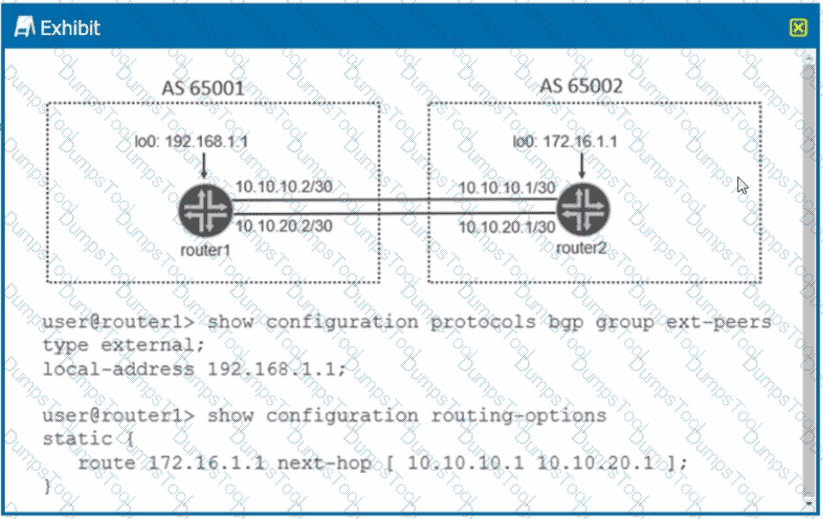
Referring to the exhibit, what is required for the BGP peering to establish?
You are asked to establish authentication for users connecting to the corporate network. You must ensure that only corporate devices that are identified by MAC addresses are allowed to authenticate and connect Authentication must be handled by a centralized database.
Which authentication method would you implement in this scenario?
Which two statements are correct about EVPN Pure Type-5 routes? (Choose two.)
Which statement accurately describes the operation of OSPF within the Junos OS?
Your Layer 2 network uses 802.1X to authenticate user devices connecting to the network. You are asked to include a new Layer 2 interface connection from the conference room in your network. You must ensure that only a single device is allowed to authenticate on this port at one time to avoid users from being able to plug in a rogue switch to this port.
In this scenario, which 802.1X method would you use for the new interface?
Exhibit
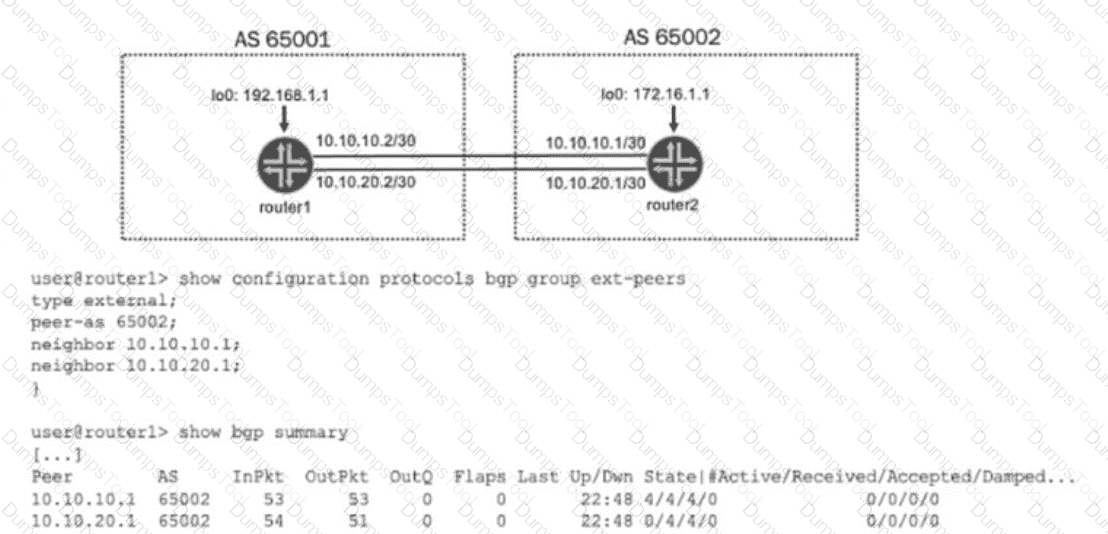
Referring to the exhibit, what will enable active routes from both peers?

TESTED 15 Oct 2026