A person is updating procedures for handling integer data within a database. Which value is an example of this data type?
An approximation of pi as 3.14159
A single keystroke from a standard keyboard
The number of baseball games in a season
Whether a bank account does or does not have money in it
Integer data is a numeric data type used to store whole numbers without fractional or decimal parts. In Information Technology and database systems, integers are commonly used for counts, quantities, identifiers, and values that naturally occur as whole numbers. The value “the number of baseball games in a season” is a count and is expressed as a whole number, making it a clear example of integer data. By contrast, 3.14159 includes decimal places and is typically stored as floating-point or decimal data rather than integer. A single keystroke is character data because it represents a symbol such as A or 7, not a quantity. Whether a bank account does or does not have money in it is a two-state condition and is best represented as Boolean data, such as true or false. Using correct data types improves storage efficiency, supports accurate validation rules, and helps ensure correct query behavior. Therefore, the correct example of integer data is the number of baseball games in a season.
What type of database uses parent-child relationships?
Embedded
Flat file
Family file
Hierarchical
Hierarchical databases use a parent-child relationship model. In this type of database, data is organized into a tree-like structure that implies a single-parent for each record. This model allows the representation of data in a hierarchy which is very much like a family tree. Each parent can have multiple children, but each child has only one parent (also known as a one-to-many relationship).
The hierarchical database model was one of the first database models, historically used with mainframe computers. In this model, records contain information about their groups of parent/child relationships, similar to a family tree. If we consider a database of employees, each department would be a parent node, and each employee within that department would be a child node of the department.
What is one purpose of business continuity planning?
Outlining a regular schedule for preventive maintenance
Creating consistency in ethical policies throughout a company
Helping define how to resume services after a disruption
Eliminating downtime for nonessential system services
Business continuity planning defines how an organization will resume and sustain essential services after a disruption. In Information Technology, disruptions can include cyberattacks, power failures, natural disasters, hardware failures, and human error. A continuity plan documents roles, responsibilities, communication steps, alternative processes, and recovery procedures so operations can continue at an acceptable level. It typically includes priorities for restoring critical systems first, along with targets such as recovery time objective and recovery point objective. Preventive maintenance is important for reducing failures, but it is not the primary purpose of business continuity planning. Ethical policy consistency is part of governance and compliance, not continuity planning. Eliminating downtime for nonessential services is unrealistic and not a central goal; continuity focuses on maintaining or restoring critical functions, and nonessential systems may remain offline during recovery. Because the plan’s purpose is to guide an organization in restarting services and operations after an incident, the correct answer is helping define how to resume services after a disruption.
Which statement describes machine language?
Code that can be run one line at a time
Code commands that directly access registers
Code expressed in the binary system
Computer code that humans can understand
Machine language is code expressed in the binary system and is the lowest-level set of instructions a computer can execute directly. In Information Technology, machine language instructions are made of bits, typically grouped into bytes or words, and each instruction corresponds to a specific operation supported by the CPU, such as loading data, performing arithmetic, comparing values, or branching to another instruction. Because it is binary, machine language is not easily readable by humans and is highly dependent on the processor architecture, meaning code written for one CPU type may not work on another. Option A describes interpreted execution, where code may be processed line by line. Option B more closely matches assembly language, which uses mnemonic commands that correspond to machine instructions and can reference registers more directly than high-level code. Option D describes high-level programming languages. Since the defining feature of machine language is that it is represented in binary and executed directly by hardware, the correct description is code expressed in the binary system.
Which generation of computing is associated with integrated circuits?
Fifth
Third
Fourth
Second
The third generation of computing is strongly associated with the introduction and widespread use of integrated circuits. Integrated circuits, often called ICs, combine many electronic components such as transistors, resistors, and capacitors onto a single silicon chip. This integration dramatically reduced the physical size of computers while increasing processing speed, reliability, and efficiency. Compared with second-generation transistor-based computers, third-generation machines produced less heat, required less maintenance, and offered better overall performance. This era also enabled more sophisticated computer designs, supporting improved input and output devices and stronger system capabilities for business and scientific computing. In many standard Information Technology references, the generational shift is summarized as first generation using vacuum tubes, second generation using transistors, third generation using integrated circuits, and fourth generation using microprocessors. Fifth generation is generally linked with artificial intelligence and advanced parallel processing concepts rather than the initial adoption of ICs. Therefore, the generation most clearly identified with integrated circuits is the third generation.
How can the organizational culture support ethical guidelines?
By outlining the protocols to support security and privacy of data
By creating the system requirements for computers in the organization
By creating the government regulations that apply to the organization
By outlining the roles of IT specialists in the organization
1.Ethical Leadership: Leaders should model ethical behavior, make decisions in the best interest of stakeholders, and ensure fairness. Ethical leaders influence followers to do the right thing.
2.Ethical Practices: Implement critical organizational practices related to ethics, including recruitment, training, policies, accountability, and decision-making.
3.Ethical Climate: Communicate ethical expectations beyond policies. Foster an environment where employees understand ethics and their implications.
Which item information should be stored in a database to determine a student's previous academic year's course load?
Course level
Course grade
Course identification number
Course name
To determine a student’s previous academic year’s course load, the most crucial piece of information is the course identification number. This unique identifier allows for the retrieval of specific data related to each course, such as the number of credit hours or units associated with the course, which directly contributes to the calculation of the course load.
Here’s a step-by-step explanation of how this information is used:
1.Identify the Student: The database must have a record of the student for whom the course load is being determined.
2.Retrieve Course Records: Using the student’s identification, the database retrieves all course records associated with that student for the specified academic year.
3.Use Course Identification Numbers: Each course taken by the student will have a unique course identification number.
4.Determine Credit Hours: The course identification number can be used to look up the credit hours or units for each course, as this information is typically tied to the course ID in the database.
5.Calculate Course Load: By summing the credit hours for all courses taken in the previous academic year, the student’s course load can be calculated.
Which statement best describes the purpose of a business intelligence (BI) system?
A BI system integrates all departments in an organization.
A BI system helps the strategic decision-making process.
A BI system allows access to raw data.
A BI system uses only proprietary data to maximize quality.
Business Intelligence (BI) systems are designed to analyze data and provide actionable information that aids in strategic decision-making. The purpose of a BI system is not merely to integrate departments or provide access to raw data, nor is it limited to using only proprietary data. Instead, BI systems enable organizations to make informed decisions based on the analysis of a wide range of data. Here’s how they work:
1.Data Collection: BI systems collect data from various sources within the organization, including all departments.
2.Data Storage: The collected data is then stored in a secure and accessible manner, often in data warehouses.
3.Data Analysis: BI tools analyze this data to find patterns, trends, and insights. This analysis can include descriptive analytics to understand past performance and predictive analytics to forecast future trends.
4.Information Presentation: The insights are then presented in an understandable format, such as reports or dashboards, which decision-makers can use to guide their strategic choices.
What is the role of professional associations regarding ethics standards in the IT profession?
To provide valuable ethical guidelines to IT professionals as they perform their work
To address ethical expectations for all IT professionals as the industry-wide Association of IT Professionals (AITP)
To engage in the development, adoption, and use of globally-accepted, industry-leading practices for all IT professionals
To provide licensing and accreditation of IT professionals
1.Providing Valuable Ethical Guidelines to IT Professionals:
oProfessional associations establish codes of ethics and codes of conduct that outline expected behavior for IT professionals.
oThese guidelines address ethical considerations related to privacy, security, honesty, and professional responsibility.
oBy adhering to these standards, IT professionals contribute to the well-being of society and uphold the public good1.
2.Engaging in the Development and Adoption of Industry-Leading Practices:
oAssociations collaborate with industry experts to develop globally-accepted best practices.
oThey promote ethical behavior by disseminating these practices through seminars, conferences, and certification courses.
oBy following these standards, IT professionals ensure the integrity and trustworthiness of their work2.
References
•ACM Code of Ethics and Professional Conduct: The ACM (Association for Computing Machinery) provides a comprehensive code of ethics for computing professionals.
•Chapter 8: The Making of a Profession: Values, Ethics, and Conducts: This chapter discusses the role of professional associations in establishing ethical guidelines.
•Code of Professional Ethics | IS/IT Certifications | ISACA: ISACA (Information Systems Audit and Control Association) emphasizes compliance and governance in IT ethics3.
•Ethics and the IT Professional | EDUCAUSE Review: Various associations, including AITP (Association of Information Technology Professionals), contribute to ethical guidance
When would a business intelligence (BI) system be useful in making a decision?
When deciding whether to promote an employee by looking at their annual sales performance
When figuring out when to reorder store inventory for a particular stock keeping unit (SKU)
When deciding if a restaurant should use more organic food in its menu, based on customer reviews and an analysis of current costs
When determining the average salary of the company's executives
A BI system shines in this scenario because it leverages the power of data from various sources and turns that into actionable insights:
•Customer Sentiment Analysis: BI systems can incorporate natural language processing to analyze customer reviews, gauging sentiment and preferences towards organic food. Trends and patterns can be identified.
•Cost Analysis: BI can pull in data on ingredient costs (organic vs. conventional), preparing a comprehensive analysis of how switching to more organic food would impact operational expenses.
•Decision Support: By combining customer sentiment, cost analysis, and potentially market trends (through external data integration), a BI system can provide a holistic view of the trade-offs and the potential impact of increasing organic food usage.
What is the component of the data-information-knowledge-wisdom DIKW hierarchy that focuses on application?
Data
Wisdom
Information
Knowledge
Knowledge is the DIKW component that focuses on application. In Information Technology, knowledge is often described as information that has been understood, combined with experience, rules, procedures, and context so that it can guide action. While information answers questions like who, what, where, and when, knowledge supports how to do something and how to solve a problem. For example, in infrastructure administration, information could be the list of server performance metrics, while knowledge includes understanding how to interpret those metrics and apply troubleshooting steps to restore normal operation. Data is raw and unprocessed, and information is processed data that has meaning in context. Wisdom is the highest level and involves judgment about what should be done, including ethical and strategic considerations. Knowledge sits between information and wisdom and is closely linked with practice, skills, and the ability to apply what is known to real tasks. Therefore, the DIKW level that focuses on application is knowledge.
What is a function of a proxy server?
It responds to HTTP requests and can execute scripts to generate dynamic pages.
It responds to user queries to create, manipulate, and retrieve records from a database.
It acts as a giant cache of web pages that anyone in the organization has recently retrieved.
It stores files that any user of the network may wish to access.
A proxy server serves several essential functions in network communication:
1.Security and Privacy:
oA proxy server acts as a gateway between the user’s device and the internet. When a user sends a request (e.g., accessing a website), it first goes through the proxy server.
oThe proxy server hides the user’s IP address, making it difficult for external entities to directly trace the user’s location or identity.
oBy acting as an intermediary, the proxy server provides an additional layer of security, protecting the internal network from potential threats and attacks.
2.Content Filtering and Access Control:
oOrganizations often use proxy servers to control internet access for their employees. The proxy can filter requests based on predefined rules.
oFor example, an organization might block access to certain websites (e.g., social media, gambling sites) or restrict access during work hours.
oContent filtering helps maintain productivity and prevent unauthorized access to inappropriate or harmful content.
3.Caching and Acceleration:
oProxy servers can cache frequently accessed web pages, images, and files. When a user requests the same content again, the proxy serves it from its cache.
oCaching reduces the load on the internet connection and speeds up access to commonly visited sites.
oIt also helps save bandwidth by minimizing redundant data transfers.
4.Load Balancing:
oIn large networks, multiple proxy servers can distribute incoming requests to different web servers. This load balancing ensures efficient utilization of resources.
oBy evenly distributing traffic, proxy servers prevent any single server from becoming overwhelmed.
5.Anonymity and Geolocation Bypass:
oSome users use proxy servers to hide their real IP addresses. This anonymity can be useful for privacy reasons or to bypass geolocation restrictions.
oFor example, a user in one country can use a proxy server located in another country to access region-restricted content.
References
1.SoftwareLab: What is a Proxy Server? Types & Examples You Need to Know
2.Kinsta: What Is a Proxy Server Used For? (And How Does It Work?)
3.Fortinet: What is a Proxy Server? Definition, Uses & More
4.KnowledgeHut: What is Proxy Server? Types, Functions & Use Cases
5.Varonis: What is a Proxy Server and How Does it Work?
Which component comes in two varieties, one that mechanically writes binary data onto spinning magnetic disks and one that writes data with no mechanical parts?
Motherboard
System clock
Expansion bus
Hard drive
The hard drive category includes two common storage varieties: traditional hard disk drives and solid-state drives. A hard disk drive stores binary data magnetically on spinning platters and uses mechanical parts such as a rotating motor and moving read and write heads. In contrast, a solid-state drive stores data using non-volatile flash memory with no moving mechanical components. In Information Technology hardware concepts, both serve the same role as secondary storage, meaning they store files, applications, and the operating system persistently even when power is off. Hard disk drives are often lower cost per gigabyte and are common in large-capacity storage, while solid-state drives provide faster access times, improved performance, and better resistance to physical shock. The motherboard is the main circuit board, the system clock provides timing pulses, and an expansion bus is a communication pathway for add-on devices. Since the question describes mechanical and non-mechanical storage types, the correct component is the hard drive.
Which method is frequently used to protect software?
Copyrights
GNU General Public License
Fair use
Trademarks
Software protection involves safeguarding software applications from unauthorized use, distribution, or reproduction. Various methods are employed to protect software, but one of the most frequently used approaches is through copyrights. Here’s why:
1.Copyrights:
oDefinition: Copyright protection grants exclusive rights to the creator or owner of the software. It prevents others from copying, distributing, or using the software without permission.
oHow It Works:
When a software developer creates an original program, they automatically hold the copyright to it.
The copyright holder can specify licensing terms and conditions, allowing or restricting certain uses.
Users must comply with these terms to legally use the software.
oBenefits:
Legal Protection: Copyright laws provide legal recourse against infringement.
Revenue Control: Developers can license their software and generate revenue.
Innovation Encouragement: Copyright protection encourages innovation by rewarding creators.
oReferences: 12
2.Other Methods:
oGNU General Public License (GPL): GPL is an open-source license that allows users to freely use, modify, and distribute software. However, it requires derivative works to be open-source as well.
oFair Use: Fair use is a legal doctrine that permits limited use of copyrighted material without permission for purposes such as criticism, commentary, or education.
oTrademarks: Trademarks protect brand names, logos, and symbols associated with software. While not directly related to software protection, trademarks play a role in branding and identity.
In summary, while other methods exist, copyrights remain a fundamental and frequently used approach to protect software from unauthorized use and ensure developers’ rights are respected.
What is the name of the wireless technology that specifically accommodates distances up to 300 feet?
Wi-Fi
Wide area network WAN
Near field communication NFC
Bluetooth
Bluetooth is the wireless technology commonly identified in IT fundamentals as supporting short-range communication up to around 300 feet in higher-power implementations. Bluetooth is designed for personal area networking, connecting devices such as headphones, keyboards, speakers, and smartphones with low power consumption and easy pairing. Different Bluetooth classes exist: some provide only a few meters of range, while higher-power versions can extend to roughly 100 meters, which is close to 300 feet, under good conditions. Wi-Fi typically supports larger local-area coverage and is used to connect devices to local networks and the internet. A wide area network is not a wireless technology standard; it is a type of network spanning large geographic areas. Near field communication is designed for extremely short distances, usually a few centimeters, and is used for contactless payments and quick device taps. Since the question asks for a wireless technology specifically accommodating distances up to 300 feet, Bluetooth best matches that description.
What is a role of the network architect?
Installing and maintaining hardware and software that makes up a computer network
Accounting for the installation and maintenance of the resources on the networks
Designing networks that meet the performance and capacity needs of an organization
Managing application development, deployment and system security of networked file systems
A network architect is a professional responsible for designing and implementing computer networks that meet the needs of an organization. Here are the key aspects of their role:
1.Designing Networks: Network architects create network infrastructures that support an organization’s goals. They work with both hardware and software components to plan and design data communication networks. These networks can range from smaller local area networks (LANs) to larger wide area networks (WANs) and intranets.
2.Installation and Implementation: Once the network design is complete, network architects oversee the installation and implementation process. They ensure that routers, modems, cables, and other necessary hardware and software are properly set up. They also determine the layout of network components within buildings or across cities and countries.
3.Security Management: Network architects play a crucial role in managing information and network security. They implement security measures to protect the network from unauthorized access, data breaches, and other threats.
4.Upgrades and Maintenance: These professionals continuously monitor the network’s performance and assess future needs. They perform upgrades to hardware and software as required. Regular maintenance and minor repairs are essential to keep the network operating smoothly and avoid downtime.
5.Documentation: Network architects maintain thorough documentation of networks, including drawings, descriptions, and configurations. This documentation helps ensure efficient management and troubleshooting.
6.Communication and Collaboration: Network architects often work alongside IT specialists and communicate with management staff. They use their understanding of the organization’s business goals to develop network systems that align with those objectives.
Which generation of computing is known for the use of operating systems to allow for shared memory and resources?
Second
Third
Fourth
Fifth
The third generation of computing is known for major advances in operating systems, especially the move toward multiprogramming, time-sharing concepts, and improved resource management. During this era, computers became powerful enough to support operating systems that could coordinate multiple programs and users more effectively, enabling shared use of memory, processing time, and peripheral devices. This meant that instead of a computer running only one program at a time with long idle periods, the operating system could schedule tasks, allocate memory, and manage input and output to keep the system busy and efficient. These developments matched the growth of integrated circuits, which improved speed and reliability and made more advanced system software practical. Third-generation systems also emphasized better user interaction through terminals and more standardized system environments. While later generations improved operating systems further, the third generation is widely credited in Information Technology history with establishing the operating system as a central system layer for managing shared resources. Therefore, the correct answer is the third generation.
Which software allows the user to easily access the hardware of a computer?
Application
Productivity
Operating system
FTP client
•The software that allows the user to easily access the hardware of a computer is the operating system.
•Explanation: The operating system serves as the interface between hardware, application software, and the user. It manages hardware resources, file systems, processes, and memory.
•References: 12
Therefore, the correct answer is C. Operating system.
There are 30 questions on a final exam. The exam will be given in room 126 at 2:00 p.m., and students have one hour to complete it. What is the data-information-knowledge-wisdom DIKW pyramid component exemplified by the statement, "I have completed 25 questions, so I am almost done"?
Wisdom
Information
Data
Knowledge
In the DIKW hierarchy, knowledge focuses on applying information to understand a situation and guide action. The exam facts such as 30 questions, room 126, 2:00 p.m., and one hour are information because they provide organized context. The statement, “I have completed 25 questions, so I am almost done,” shows interpretation and application: it uses progress data, compares it to the total number of questions, and draws a practical conclusion about task completion. This is more than raw data, because the numbers are being used to reason about status. It is also not wisdom, because it does not involve an ethical or best-action judgment beyond the immediate conclusion. It represents knowledge because the student is applying understanding of the goal and current progress to evaluate where they stand and to manage time and effort. In Information Technology contexts, this is similar to using metrics to determine completion percentage in a project or workload tracking system. Therefore, the correct DIKW component here is knowledge.
Based on the instructions on the package, a frozen pizza should be baked for 18 minutes at 400°F. Which term describes the statement, "The pizza looks done after 16 minutes, so it should be taken out," based on the data-information-knowledge-wisdom DIKW hierarchy?
Information
Data
Wisdom
Knowledge
In the DIKW hierarchy, wisdom is the level that reflects judgment about what should be done in a specific situation. The package instruction, bake for 18 minutes at 400°F, is information because it is organized and contextualized guidance. The statement, “The pizza looks done after 16 minutes, so it should be taken out,” goes beyond repeating the instruction. It uses observation and judgment to decide the best action in context. This is characteristic of wisdom because it applies experience and situational awareness to choose an appropriate decision, even when it differs from the standard guideline. Knowledge would involve understanding how cooking time can vary based on oven performance, pizza thickness, and placement in the oven, and being able to apply techniques to manage those variables. Wisdom is the decision to act correctly in the moment, balancing the instructions with real evidence, such as doneness appearance, smell, or risk of burning. Therefore, this statement fits wisdom because it selects the right action based on contextual judgment.
Which type of off-site storage is an empty shell that can be used for operations in the event of a natural disaster or terrorist attack?
Icy site
Warm site
Cold site
Hot site
The type of off-site storage that serves as an empty shell for operations during a natural disaster or terrorist attack is a Cold site1. Unlike a Hot site, which is fully operational and ready for immediate use, a Cold site requires setup and provisioning before it can be utilized1. It provides a cost-effective solution for disaster recovery while minimizing ongoing expenses.
What is a characteristic of cloud computing?
Cloud computing provides services ranging from simple storage to load balancingfor large-scale computational processing.
Cloud computing requires client computers to download specific software.
Cloud computing increases investments in IT in order to meet increasing IT demands.
Cloud computing increases the need for internal IT personnel.
1.On-demand self-service:
oCloud computing services do not require human administrators. Users can provision, monitor, and manage computing resources as needed.
oWith data centers worldwide, cloud providers have vast compute and storage assets ready for use.
oDevelopers can select resources and tools through a self-service portal, building applications without waiting for physical servers.
oAdmins set policies, but within those guardrails, employees have the freedom to build, test, and deploy apps.
A company uses the most up-to-date operating system developed by Microsoft for a desktop computer on its internal network. Which system software does this company's computer use?
Linux
Android
Windows
iOS
Microsoft’s desktop operating system family is Windows, so a company using Microsoft’s most up-to-date desktop operating system is using Windows. In Information Technology, an operating system is system software that manages hardware resources, provides a user interface, and supports applications by handling tasks such as memory management, process scheduling, file systems, device drivers, and network connectivity. Windows is widely used in business environments because of its strong integration with enterprise tools such as Active Directory, Group Policy, Microsoft 365 services, and broad compatibility with commercial software and peripherals. The other options are operating systems from different ecosystems: Linux is an open-source family of operating systems, Android is primarily designed for mobile devices, and iOS is Apple’s mobile operating system for iPhone. Since the question specifically states the operating system is developed by Microsoft and used on a desktop computer, the correct choice is Windows.
A person is preparing a pizza, which needs to be baked for 18 minutes at 400°F. Which component of the data-information-knowledge-wisdom DIKW hierarchy is exemplified by the value 18 in this scenario?
Knowledge
Wisdom
Information
Data
In the DIKW hierarchy, the value 18 by itself represents data because it is a raw numeric fact without meaning until it is connected to context. In Information Systems fundamentals, data is defined as unprocessed facts such as numbers, symbols, or measurements that do not explain their purpose on their own. The number 18 could represent many things: minutes, dollars, items, or a temperature reading. Once the number is connected to the statement baked for 18 minutes, it becomes information because the data has been given context and meaning. Knowledge would involve understanding how baking time interacts with oven type, pizza thickness, or cooking technique, and being able to apply that understanding to adjust cooking when conditions change. Wisdom would involve making the best overall decision, such as considering health, safety, and preventing burning based on real-world judgment. Since the question asks specifically about the value 18 in isolation, it matches the DIKW definition of data as a raw fact. Therefore, the correct answer is data.
What is the hardware component that contains soldered parts and slots for other pieces of hardware that can be removed?
Motherboard
Hard drive
System clock
Expansion bus
The motherboard is the main circuit board in a computer that contains soldered components and provides slots and connectors for removable hardware. In Information Technology hardware fundamentals, the motherboard holds essential components such as chipset circuitry, connectors, and sometimes integrated devices like audio or network controllers. It also provides sockets and slots for components that may be installed or replaced, such as the CPU socket, RAM slots, and expansion slots like PCIe for graphics cards or other add-on cards. The motherboard includes pathways called buses that enable communication among the processor, memory, storage, and peripheral devices. A hard drive is a storage device and does not serve as the central board for system components. The system clock is a timing mechanism, not a physical board containing multiple slots. An expansion bus refers to a communication pathway standard, not the full board that hosts multiple connectors and soldered parts. Therefore, the component described is the motherboard.
What does a modem do?
Manages traffic by maintaining a table of known devices on the network
Provides services, such as website hosting and routing, for various devices
Serves as a connection between the customer network and the internet service provider
Provides a barrier between a trusted private network and an untrusted network
A modem serves as the connection between the customer network and the internet service provider. In Information Technology networking, modem stands for modulator-demodulator. Traditionally, it converts outgoing digital data from a computer or router into a form suitable for transmission over the provider’s communication medium and converts incoming signals back into digital data. Depending on the service type, this may involve cable, DSL, fiber, or cellular technologies, each using specific signaling methods. The modem typically terminates the ISP line and hands off connectivity to a router or directly to a computer. Option A describes routing or switching behavior rather than a modem function. Option B describes a server that offers hosted services. Option D describes a firewall, which protects a trusted network by filtering traffic from untrusted networks. Since the essential purpose of a modem is enabling communication between the customer premises equipment and the ISP network, the correct choice is that it serves as the connection between the customer network and the internet service provider. Therefore, the correct answer is option C.
Which data type should be used to calculate 90% of the retail price of an item?
Boolean
Floating-point
Auto-number
String
To calculate a percentage of a price, you need a data type that can handle decimal values, as the result may not be a whole number. Here’s why a floating-point data type is appropriate:
1.Precision: Floating-point data types are designed to handle numbers that have a fractional part, which is essential for representing percentages accurately.
2.Calculation: When calculating 90% of a retail price, you multiply the price by 0.9. This operation requires a data type that can represent both the price and the resulting product with decimal precision.
3.Storage: Floating-point types can store a wide range of values with precision, making them suitable for financial calculations where the exact amount matters.
The other options are not suitable for the following reasons:
•A. Boolean: Can only represent two values, true or false.
•C. Auto-number: Typically used for unique identifiers and cannot represent fractional values.
•D. String: While it can represent a number as text, it is not suitable for calculations without conversion, which is inefficient and error-prone.
What is the arrangement of network devices in a mesh topology?
All devices are connected to a single central device.
Devices are connected to a common communication line.
Every device is connected to every other device.
Every device is connected to exactly two other devices.
In a mesh topology, every device is connected to every other device. In Information Technology networking fundamentals, a full mesh topology provides multiple direct paths between nodes, which improves redundancy and fault tolerance. If one connection fails, data can often be rerouted through other links, reducing the chance of total network disruption. This makes mesh designs valuable for mission-critical environments where high availability is required. However, the number of connections grows quickly as devices increase, which raises cost, complexity, and management overhead. The other options describe different topologies: a star topology connects all devices to a central device such as a switch, a bus topology connects devices to a single shared communication line, and a ring topology connects each device to exactly two others, forming a loop. Because the defining feature of a mesh is the extensive interconnection among devices, the correct description is that every device is connected to every other device. Therefore, the correct answer is option C.
Which computing term describes a collection of hardware and software components that work together to meet the needs of the user?
A hard drive
An operating system
A computer system
A motherboard
The computing term that describes a collection of hardware and software components working together to meet the needs of the user is C. A computer system.
A computer system consists of both physical hardware components (like the central processing unit, monitor, keyboard, etc.) and software components (such as operating systems, applications, and programs).
References
1.WGU Introduction to IT (KSO1) Algorithm1.
Why is business continuity planning essential?
It ensures that the company will avoid asset loss.
It allows for succession planning.
It allows for the quickest return to business operations.
It ensures that the company will be profitable.
Business continuity planning (BCP) is essential for several reasons:
1.Minimizing Downtime:
oBCP ensures that an organization can continue its critical functions during and after disruptions.
oBy having a well-thought-out plan, companies can minimize downtime and quickly resume operations.
2.Risk Mitigation:
oBCP identifies potential risks (e.g., natural disasters, cyberattacks) and develops strategies to mitigate and recover from them.
oIt goes beyond traditional business plans, focusing on resilience during adversity.
3.Economic Stability:
oEconomic downturns (e.g., recessions) pose significant threats to businesses.
oA continuity plan helps companies sustain operations even during tough times, preventing financial instability.
4.Adaptability to Growth:
oDuring periods of growth, businesses need to scale rapidly.
oA continuity plan ensures that infrastructure, resources, and workforce can adapt effectively.
What are two roles of the Internet in the business ecosystem?
Choose 2 answers
Connecting remote employees and offices across wide distances
Allowing software to be purchased by one user and shared across the company
Marketing of products and services
Increasing information control and security
The Internet plays two important roles in the business ecosystem:
1.Marketing of products and services: The Internet provides a platform for businesses to promote their products and services globally, reaching a wider audience.
2.Connecting remote employees and offices across wide distances: Through the Internet, remote employees can collaborate, communicate, and work effectively regardless of geographical boundaries.
References
1.The Role of Internet in Business
2.The great transformer: The impact of the Internet on economic growth
In which generafion of computers were vacuam tubes used as one of the hardware components?
First
Second
Third
Fourth
•Verified Answer: Vacuum tubes were used as one of the hardware components in the first generation of computers.
•Explanation: The first-generation computers, developed between 1946 and 1959, relied on vacuum tubes for their circuitry. These vacuum tube computers paved the way for electronic computing.
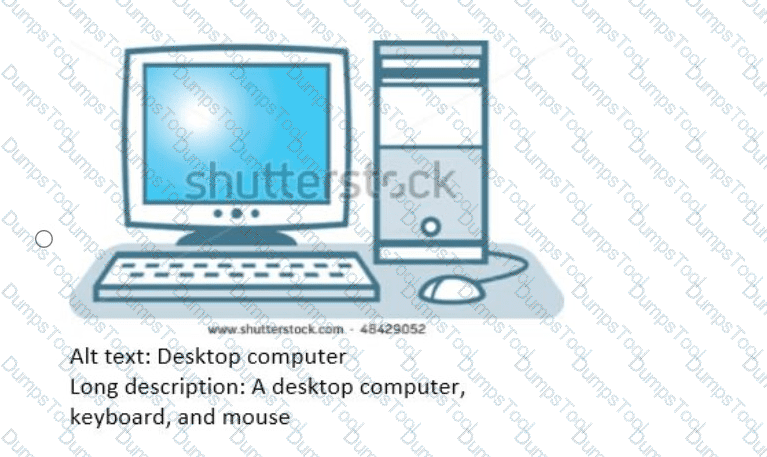
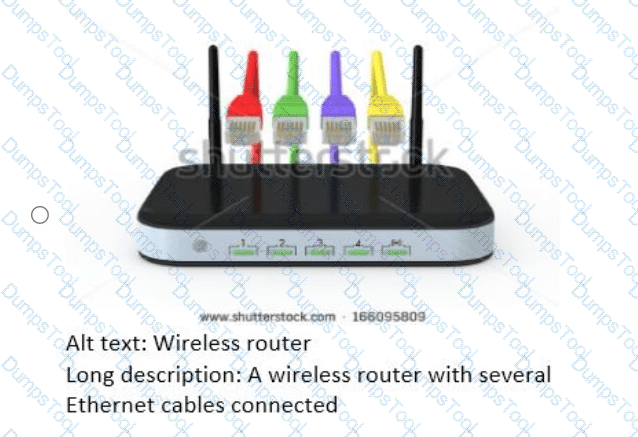
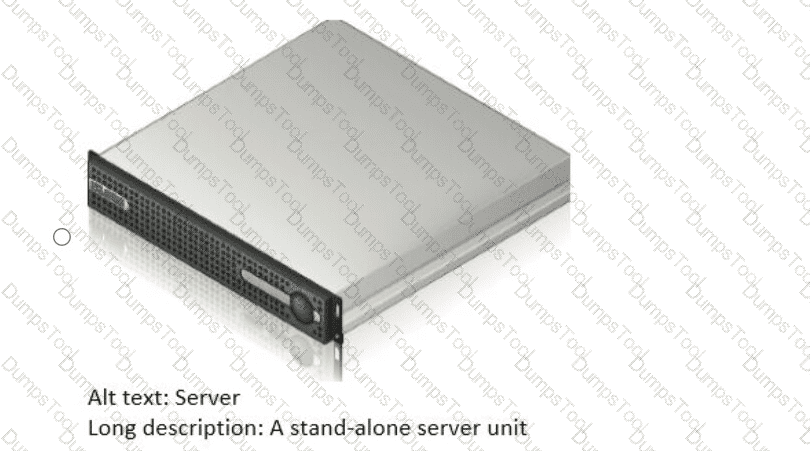
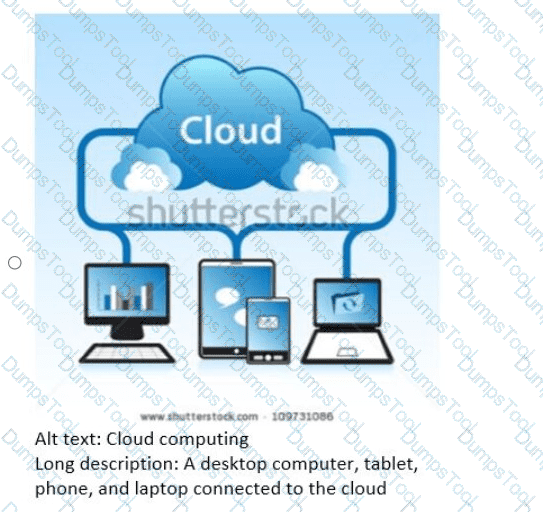
Which image represents the basic structure of a computer network?


Exhibit A
Exhibit B
Exhibit C
Exhibit D
the basic structure of a computer network is the one depicting cloud computing. In this image, a blue cloud labeled “Cloud” is connected to four different types of devices: a desktop computer, tablet, phone, and laptop. Each device has an icon representing its type, and all devices are connected to the cloud, symbolizing data access and storage on the cloud.
What type of software utilizes a commercial software license?
Proprietary
Shareware
Public Domain
Open Source
•Proprietary software refers to software that is closed source and is commercially licensed. It is developed by a specific company or individual, and its source code is not publicly available.
•In proprietary software, the end user does not have the authority to modify or reuse the software code. The software is typically distributed as operational code only, without providing access to the underlying source code.
•Proprietary licenses often include terms that prohibit “reverse engineering” of the object code with the intention of obtaining the source code.
•Examples of proprietary software include Microsoft Office, Adobe Photoshop, and many commercial applications.
•References:
o1 Snyk. “What is a software license? 5 Types of Software Licenses Explained.” Link
o2 Turing. “Open Source vs. Commercial Software License: What Do You Need?” Link
o3 License.md. “What type of license is needed for Commercial Use Software?” Link
o4 Thales Group. “Commercial License FAQ.” Link
Note: While proprietary software utilizes a commercial software license, it’s essential to understand that open-source software (which is freely available and allows modification and reuse of source code) falls under a different category. However, for the specific question, the correct answer is A. Proprietary.
What are two differences between a handheld computer and a desktop?
Choose 2 answers.
A desktop has more memory.
A desktop has more internal storage.
A handheld has more internal storage.
A handheld has more memory.
1.Smaller Screens:
oVerified Answer: Handheld computers (such as smartphones and tablets) have smaller displays compared to desktop computers.
oExplanation: Handheld screens are typically around 3-5 diagonal inches for phones and up to 9-12 inches for tablets. In contrast, desktop screens range from 20-30 inches diagonally.
oReferences: 1
2.Processing Power and Customizability:
oVerified Answer: Desktop computers usually have more processing power, memory, and storage capacity than handheld devices.
oExplanation: Desktops are ideal for resource-intensive tasks like video editing, gaming, and software development. Handheld devices, while becoming more powerful, are still constrained by size and battery life considerations.
Which type of network is used to connect wireless headphones to a smartphone?

Personal area network PAN
Local area network LAN
Wide area network WAN
Extended area network EAN
Wireless headphones typically connect to a smartphone using Bluetooth, which is an example of a personal area network. In Information Technology, a personal area network is a short-range network centered around an individual’s devices, usually within a few meters. PAN technology is designed for low power usage and convenient device pairing, making it ideal for accessories such as headphones, smartwatches, fitness trackers, and wireless keyboards. A local area network covers a larger area such as a home, office, or campus and commonly uses Ethernet or Wi-Fi to connect computers and network devices. A wide area network spans large geographic distances and connects networks across cities, countries, or continents, often using leased lines or internet infrastructure. Extended area network is not a standard category used in most networking fundamentals curricula compared with PAN, LAN, MAN, and WAN. Since the connection between headphones and a phone is short-range and personal, it is best classified as a personal area network. Therefore, the correct answer is PAN.
TESTED 20 Feb 2026
Copyright © 2014-2026 DumpsTool. All Rights Reserved