dumpstool logo

Which of the following statements about BGP RRs is incorrect?
Fully meshed IBGP connections need to be established between non-clients.
A maximum of three levels of RRs can be deployed.
The routes learned from EBGP peers are advertised to all clients and non-clients.
RRs in different clusters need to establish fully meshed IBGP connections to learn routes from each other.
Huawei Reference Verification:
Huawei defines a route reflector as an IBGP router that advertises eligible routes to other IBGP peers according to client and non-client relationships, reducing the need for a full mesh among all routers. A route reflector can itself operate as a client of a higher-level reflector, allowing hierarchies designed for large transport networks. The BGP protocol specifies loop-prevention information such as Originator ID and Cluster List but does not impose a universal maximum of three RR hierarchy levels. Hence B, which asserts a fixed three-level limit, is incorrect. The other statements describe common flat RR deployment rules, assuming route policies permit advertisement.
Technical Deep Dive:
B is incorrect. Ordinary IBGP split-horizon behavior prevents a route learned from one IBGP neighbor being readvertised to another ordinary IBGP neighbor. RRs relax this rule for their client relationships to reduce session count. An RR reflects client-learned routes to its clients and non-clients, and eligible non-client-learned routes to clients. Non-clients in a conventional flat RR model still require suitable full-mesh connectivity, and RRs in different flat clusters often maintain full-mesh IBGP sessions. Externally learned routes can be advertised to eligible IBGP clients and non-clients, subject to policy. More than three RR tiers are possible in the protocol, although excessive hierarchy can increase path-selection complexity and convergence time. Route-reflection loop prevention uses Originator ID and Cluster List. Thus three tiers may be a particular operator's design recommendation but not a universal technical limitation.
───────────────────────────────────────────────────────
Which of the following statements regarding the telco cloud network are correct?
Select all that apply.
If two DC GWs are single-homed to PEs, you are advised to adjust route preference in a way that traffic from the two DC GWs uses different PEs as next hops. Otherwise, one PE may become overloaded.
If the management & storage network and service network are deployed independently, they are physically isolated. If one network is attacked, the other network continues to run as usual, ensuring overall security.
The service network uses the flattened spine-leaf architecture to provide high bandwidth, elastic scalability, and flexible access.
As the telco cloud network expands, some sites that use box-shaped devices as DC GWs may fail to meet the bandwidth requirements of north-south service traffic, yet carriers may not want to replace existing DC GWs with high-capacity ones. In this case, the egress bandwidth of the telco cloud network can be increased by adding more DC GWs.
Huawei Reference Verification:
Huawei's Telco Cloud Transport architecture connects cloud workloads through spine-leaf fabrics, DC gateways, PEs, and centrally managed service networks. Route preference can distribute north-south traffic among PEs to avoid concentrated utilization. Separate management/storage and production networks improve operational isolation. A flattened spine-leaf topology provides multiple equal-cost routed paths and supports horizontal expansion. Where existing gateway appliances cannot carry projected north-south throughput, additional DC GWs can increase aggregate egress capacity when upstream routing and connectivity are correspondingly engineered. These points support all four intended design statements, although isolation must not be confused with an unconditional security guarantee.
Technical Deep Dive:
A, B, C, and D describe the intended telco-cloud engineering model. With multiple single-homed gateways, BGP preference and next-hop policies can steer traffic so one PE does not become an unnecessary bottleneck. Physically separating management/storage and service functions reduces shared fault and attack exposure; access controls and other safeguards remain necessary because separation alone does not guarantee availability. A spine-leaf fabric uses multiple equal-cost underlay paths, predictable scale-out and flexible server/VNF attachment. Additional DC gateways increase north-south capacity when their upstream links and route-selection policies distribute flows appropriately. VXLAN with EVPN can isolate tenants over an IP underlay and provide distributed gateway service. Supported ASICs accelerate VXLAN encapsulation, IP lookups and ECMP decisions. The overarching objective is to scale bandwidth, reliability, segmentation and automation together, rather than merely increasing switch or gateway port capacity. Option B's phrase guaranteeing overall security should be softened.
───────────────────────────────────────────────────────
iFIT is an in-band flow-measurement technology that delivers highly precise performance measurements based on real traffic. Which functions can it provide when used with telemetry, a second-level data-collection technology, and NCE, an integrated management and control platform?
Select all that apply.
Network redundancy protection
Fast fault demarcation and locating
Real-time network quality visualization
Proactive monitoring
Exact Extract — Huawei Training Material (Automatic SDN Network O & M, p.52):
“iFIT is a performance detection method for in-service traffic detection. It provides high-precision real-time traffic detection and works with the Telemetry second-level data collection to implement real-time visualization of network quality, proactive monitoring, and quick fault demarcation and locating.”
Huawei Reference Verification:
Huawei's Automatic SDN O & M module characterizes iFIT as in-service flow performance detection using high-precision real-traffic measurement and second-level telemetry. It specifically lists real-time visualization of network quality, proactive monitoring, and quick fault demarcation and location. iFIT-enabled forwarding hardware identifies measured flows, counts packets and records time information to calculate delay and loss. iMaster NCE-IP correlates these records across network nodes to present service-level performance and identify the faulty section. Network redundancy protection is a separate function associated with protection mechanisms rather than measurement. Accordingly B, C and D are correct.
Technical Deep Dive:
B, C and D are correct. iFIT works on real production flows rather than relying entirely on synthetic probing, which may not follow the same forwarding path as customer traffic. Ingress and downstream measurement points record packet counts and timestamps. Comparing samples across hops supports fault demarcation, while telemetry sends near-real-time records to iMaster NCE-IP for SLA visualization and proactive abnormality detection. Packet-loss rate is calculated as (Tx-Rx)/Tx, using corresponding observation windows and matched flows. Supported forwarding NP/ASIC functions implement flow identification and statistical operations at high throughput. The controller can use observed packet loss, delay or jitter to inform tunnel optimization or self-healing workflows. But iFIT itself does not provide the alternate link, replicated forwarding state or local FRR operation necessary for redundancy. Mechanisms such as TI-LFA, VPN FRR or hot standby provide protection; iFIT supplies the visibility required to detect and localize degradation.
───────────────────────────────────────────────────────
In BGP EVPN, which of the following route types is used to advertise external routes?
Type 3
Type 5
Type 1
Type 2
Type 4
Huawei Reference Verification:
Huawei BGP EVPN defines route types to distribute distinct categories of Ethernet VPN reachability. Type 1 identifies Ethernet Auto-Discovery information, Type 2 MAC/IP bindings, Type 3 inclusive multicast information, and Type 4 Ethernet Segment information. Type 5 is the IP Prefix route and advertises IPv4/IPv6 prefixes, including external routes imported from another protocol or routing domain. RFC 9136 standardizes EVPN IP Prefix Advertisement route type 5. Therefore the correct selection for external IP-prefix reachability is B.
Technical Deep Dive:
B is correct. EVPN is an MP-BGP control plane capable of supporting Layer 2 bridging and Layer 3 service distribution over an MPLS or VXLAN transport. A remote subnet or imported external prefix does not require advertising every individual destination MAC address. Instead a Type 5 IP Prefix Advertisement announces the network prefix, attributes and associated next-hop information. A receiving PE imports it according to route-target policy, resolves the EVPN next hop and installs the forwarding entry in the correct tenant or VPN table. Type 2 MAC/IP routes mainly represent host address bindings, Type 3 supports BUM transport setup, Type 1 supports Ethernet Auto-Discovery and Type 4 Ethernet Segment information. Thus the presence of five offered route types does not make the question multi-answer: Type 5 alone is the IP-prefix route. VRP verification can use `display bgp evpn all routing-table` and the relevant VPN-instance route display.
───────────────────────────────────────────────────────
In the distributed telco-cloud network shown, traffic is sent from the external network to the VNF. The route configurations on the relevant DC GW are shown. How is the traffic forwarded within the telco-cloud network, from the DC GW to the leaf node?
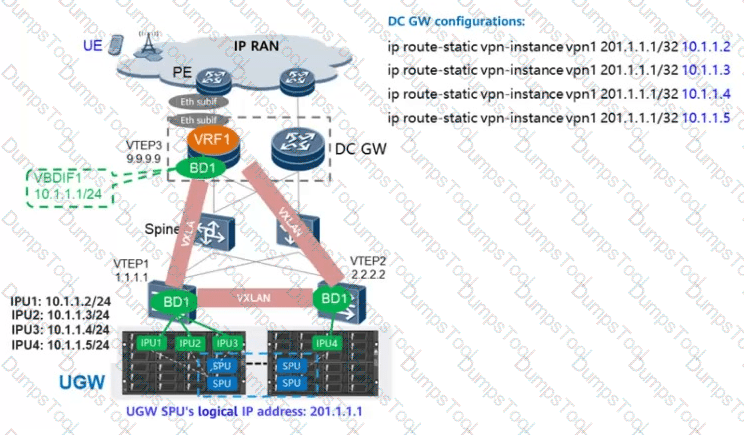
Exhibit 14.1 — Original topology/configuration figure
Forwarded over a Layer 2 VXLAN tunnel
Forwarded over a Layer 3 VXLAN tunnel
Forwarded over a VPN after being encapsulated with VPN and public network labels
Directly forwarded by the IP network
Huawei Reference Verification:
Huawei's underlay/overlay architecture distinguishes VXLAN tenant transport from the IP underlay that provides VTEP reachability. In this topology the DC GW's static VPN route resolves through next-hop addresses belonging to subnet 10.1.1.0/24. That subnet is attached to VBDIF1 and bridge domain BD1, which carries the corresponding Layer 2 VXLAN service. The VBDIF supplies a routed interface into a bridge domain, but the resulting transport from DC GW VTEP to leaf VTEP is an Ethernet frame encapsulated in VXLAN. Consequently the forwarding between these VXLAN endpoints is through a Layer 2 VXLAN tunnel.
Technical Deep Dive:
A is correct. The gateway performs a route lookup in VPN instance vpn1 and resolves the selected next-hop IP through the VBDIF1/BD1 connectivity. ARP/EVPN host reachability determines the Layer 2 destination associated with the remote leaf VTEP. The gateway encapsulates the resulting Ethernet frame using VXLAN and forwards the outer IP packet across the routed underlay. The leaf decapsulates the VXLAN packet and forwards traffic to the VNF. Using VBDIF for the route lookup does not by itself turn this particular transport into a Layer 3 VXLAN tunnel; the relevant BD carries the Layer 2 overlay. The alternative MPLS-label answer assumes a different transport encapsulation, while pure unencapsulated IP forwarding ignores the VXLAN fabric. On supported Huawei ASICs, VXLAN encapsulation, MAC lookup, and tunnel forwarding can occur in dedicated packet-processing hardware.
───────────────────────────────────────────────────────
Which of the following statements regarding EVPN on a 5G transport network is incorrect?
EVPN L3VPN routes appear only in the EVPN routing table, not in the display bgp vpnv4 all routing-table command output.
In the IP VPN instance of each device, the RT needs to be changed to be advertised in the EVPN address family.
If EVPN is used to carry L3VPN services, you must run the advertise l2vpn evpn command in the BGP-VPN instance IPv4 address family view. Otherwise, routes are advertised through VPNv4 by default.
When SR tunnels are used to carry EVPN traffic, the evpn mpls routing enable command must be run in the VPN instance view.
Huawei Reference Verification:
Huawei EVPN L3VPN advertises IPv4/IPv6 customer prefixes using EVPN IP Prefix routes, while VPN-instance routing contexts maintain the reachability needed for customer forwarding. The command `advertise l2vpn evpn` enables the applicable VPN-instance routes to be advertised through EVPN. Route import and local VPN-instance visibility may involve EVPN and VPNv4-related display contexts depending on the device and release. The answer key identifies A as incorrect because it imposes an absolute restriction that EVPN L3VPN routes appear only in the EVPN table. Note that EVPN Type 5 NLRI and VPNv4 NLRI are distinct BGP address families, so the exact global-table display assertion requires careful release-specific interpretation.
Technical Deep Dive:
A is the intended incorrect choice, with technical qualification. EVPN Type 5 IP Prefix routes distribute customer subnets for L3VPN services over EVPN transport. They can be imported into a local VPN routing context, where forwarding routes are programmed for the service. Huawei commands include `display bgp evpn all routing-table`, `display bgp vpnv4 all routing-table`, `display bgp vpnv4 vpn-instance vpn1 routing-table`, and `display ip routing-table vpn-instance vpn1`. These inspect different address-family and VPN-instance views. The intended curriculum item rejects the unconditional claim that EVPN L3VPN routing information exists only in one EVPN table. Nevertheless, EVPN Type 5 advertisements do not automatically turn into VPNv4 NLRI in every global BGP table; output depends on actual import and advertisement configuration. Option C contains a common typing confusion: the command is `advertise l2vpn evpn` with lowercase letter L, not the digits '12'. Option D's feature view is also product-release dependent. Publish a release qualification for this item.
───────────────────────────────────────────────────────
Which of the following statements are true regarding multicast packets in a BIERv6 multicast network?
Select all that apply.
The destination nodes of a multicast packet can belong to only one set.
The destination nodes of a multicast packet can belong to multiple sets.
Only one copy of multicast packets can be transmitted over one link on the multicast network.
Multiple copies of multicast packets can be transmitted over one link on the multicast network.
Huawei Reference Verification:
Huawei BIERv6 maps receiver BFR-IDs into BitStrings divided into sets according to the BitString length. A single multicast service may have receivers whose BFR-IDs belong to more than one set. The ingress BFIR must create set-specific copies with the matching Set Identifier and BitString. Because several sets may share part of the forwarding topology, multiple copies of the same multicast flow can traverse the same physical link. This makes B and D true, while the statements that receivers must share one set or that only one copy can traverse a link are incorrect.
Technical Deep Dive:
B and D are correct. A BIERv6 BitString indicates target receiver BFR-IDs within a set. If receiver numbering or scale exceeds one set's capacity, traffic is represented by multiple set-specific packets. A BFIR creates the necessary copies and each carries the proper set number and BitString; forwarding nodes replicate according to their BIFT. Paths for different sets can overlap, so two or more copies of the same multicast payload may traverse a shared link. This differs from the simplified expectation that a multicast forwarding tree always carries exactly one copy per link. BFR-ID planning is important because efficient allocation can reduce unnecessary duplicated packets and optimize bandwidth usage. Destination sets permit scalability without arbitrarily large per-packet BitStrings. The forwarding hardware uses the set and bit information to select the next-hop fan-out.
───────────────────────────────────────────────────────
The underlay layer of a telco cloud network can use a Layer 3 routing protocol, such as OSPF, IS-IS, or BGP, to provide IP connectivity between spine and leaf nodes.
TRUE
FALSE
Huawei Reference Verification:
Huawei's underlay/overlay architecture identifies the underlay as the physical network carrying overlay traffic. Routing protocols provide IP reachability between spine, leaf, and VTEP interfaces. The underlay can run OSPF or IS-IS as link-state protocols or BGP as a routed IP-fabric control plane. These distribute the reachable infrastructure networks and loopback addresses required for EVPN VXLAN tunnel operation. The overlay then supplies logical tenant/service connectivity while relying on the underlay to deliver encapsulated packets. This directly supports the statement that OSPF, IS-IS, or BGP can provide the spine-leaf Layer 3 underlay.
Technical Deep Dive:
A is TRUE. A routed spine-leaf fabric requires IP connectivity between infrastructure nodes and VXLAN tunnel endpoints. OSPF exchanges LSAs and calculates SPF paths. IS-IS performs link-state routing using LSPs and is commonly deployed in carrier networks. EBGP can provide a scalable routed leaf-to-spine design without extending one large IGP everywhere. When VXLAN is used, VTEP loopback addresses must resolve through an underlay route; an EVPN service route is unusable if its VTEP next hop cannot be reached. Equal-cost routes across multiple spines allow ECMP load distribution. The controller or routing processes compute network reachability, while the forwarding ASIC consults the installed FIB and implements the chosen next-hop/tunnel operations. Huawei VRP commands `display ospf peer`, `display isis peer`, `display bgp peer`, `display ip routing-table`, and `display fib` establish whether underlay adjacency, reachability and forwarding state are healthy.
───────────────────────────────────────────────────────
Which of the following statements is incorrect regarding SRv6 protection technologies?
In an SRv6 TE Policy scenario, if a specified explicit node fails, TI-LFA cannot be used to restore services.
TI-LFA can be used in both SRv6 BE and SRv6 TE Policy scenarios.
In an SRv6 TE Policy scenario, after headend-based fault detection is configured, the device sets the segment list to down and deletes the segment list entry as long as more than two SRv6 SIDs in the segment list do not exist in the topology.
In an L3VPN scenario, if traffic is carried over an SRv6 TE Policy, both egress protection and VPN FRR can protect PEs.
Huawei Reference Verification:
Huawei SRv6 TE Policies contain candidate paths and segment lists whose validity depends on reachability of their mandatory SIDs. Headend fault detection can mark a segment list Down when an essential SID becomes unreachable or disappears from the relevant topology. There is no general rule that more than two SIDs must fail before a segment list is invalidated. Protection may use another valid segment list, candidate path, or VPN-level alternate route. The threshold claim in C is therefore incorrect. The other options describe intended TI-LFA and service-PE protection functions with the deployment constraints applicable to explicit SRv6 paths.
Technical Deep Dive:
C is incorrect because a mandatory SID disappearing from the topology can invalidate a segment list regardless of whether other SIDs remain reachable. SRv6 TE Policy selects candidate paths containing ordered segment lists; the headend must ensure the required path instructions remain viable. It may switch to another candidate or segment list when one becomes invalid. TI-LFA supplies precomputed local protection for eligible link or node failures but cannot always bypass a failed explicitly required segment while still honoring the specified TE path. SRv6 BE and SRv6 TE Policy may both use local protection subject to endpoint and path constraints. In an L3VPN, VPN FRR or egress protection can also protect service reachability against PE failure. The key distinction is local repair versus headend path validity. The specific deletion and invalidation behavior should follow the product release's headend fault-detection implementation rather than an arbitrary count of missing SIDs.
───────────────────────────────────────────────────────
A device receives two BGP routes for the same prefix from two peers, with one route received from each peer. One route has next hop NH1, whereas the other has next hop NH2. All other attributes of the two routes are identical. NH1 recursively resolves to two direct next hops, A and B, and NH2 likewise recursively resolves to two direct next hops, C and D. If BGP is configured with the maximum load-balancing 2 command and the device supports at most six load-balancing routes, how many load-balancing routes for the relevant prefix are present in the FIB?
4
2
3
1
Huawei Reference Verification:
Huawei's BGP multipath architecture distinguishes the number of BGP routes selected from the number of directly reachable FIB next hops produced by route recursion. The maximum load-balancing parameter controls the number of eligible equal-cost BGP paths. Each selected BGP next-hop address may recursively resolve through multiple equal-cost direct next hops. In this scenario two BGP paths are selected and each resolves through two direct forwarding alternatives. The total of four FIB next hops remains within the stated platform maximum of six. Therefore the correct answer is four.
Technical Deep Dive:
A is correct. `maximum load-balancing 2` permits two equivalent BGP paths for one destination, which here have BGP next hops NH1 and NH2. Route recursion then considers the IGP or directly connected paths that make each BGP next hop reachable. NH1 resolves to direct next hops A and B, while NH2 resolves to C and D. The installed FIB next-hop group therefore contains A, B, C and D, four choices in total. The device's six-path upper limit is a cap rather than a requirement to synthesize six routes. On Huawei carrier routers, the BGP control plane selects and resolves paths; forwarding NP/ASIC logic performs ECMP selection among the installed direct next hops. Useful diagnostic commands include `display bgp routing-table`, `display ip routing-table`, and `display fib`. The distinction between BGP multipath selection and physical recursive next-hop expansion is the key to the question.
───────────────────────────────────────────────────────
When synchronizing LSDBs over a P2P network, IS-IS does not need to send CSNPs.
TRUE
FALSE
Huawei Reference Verification:
Huawei's IS-IS implementation distinguishes the CSNP behavior on broadcast and point-to-point links. A DIS periodically sends CSNP summaries on broadcast networks, but P2P adjacencies still exchange CSNPs during initial database synchronization. After comparing the received complete list of LSP headers with its own LSDB, a router can use PSNPs to request missing information or acknowledge LSPs. The absence of periodic DIS-based CSNP flooding on P2P links does not mean that CSNPs are never exchanged. Hence the assertion that P2P synchronization does not need CSNPs is false.
Technical Deep Dive:
B is FALSE. IS-IS uses Hellos to establish adjacency, LSPs to disseminate link-state information, and SNPs to compare or request database information. A CSNP provides a complete summary of known LSPs; PSNPs carry partial summaries, requests or acknowledgments depending on link context. On a P2P link, the two routers exchange CSNPs when the adjacency is initially established so they can identify differing LSP content. Missing or stale LSPs are requested or refreshed through the appropriate PSNP and LSP exchange. P2P links do not elect a DIS and thus lack the periodic DIS behavior seen on multiaccess LANs. But the absence of a DIS is not proof that CSNP is unnecessary at adjacency setup. This is an important exam-key correction: the intended statement is false under Huawei's documented P2P LSDB synchronization procedure.
───────────────────────────────────────────────────────
In an EVPN VXLAN solution, which of the following features can be enabled to reduce ARP packet flooding between VTEPs?
Select all that apply.
Local proxy ARP
Host information collection
ARP broadcast suppression
Interface isolation
Huawei Reference Verification:
Huawei EVPN VXLAN provides ARP optimization through local proxy ARP, host-information collection and ARP broadcast suppression. The VTEP learns or imports IP-to-MAC mappings, which can be distributed through EVPN MAC/IP routes. When the destination mapping is known, the VTEP may answer ARP requests locally rather than flooding the request to remote VTEPs. ARP suppression similarly limits broadcasts when suitable host reachability information exists. Interface isolation restricts endpoint communication but does not independently supply the IP/MAC resolution or flood-suppression mechanism. Thus A, B and C are applicable.
Technical Deep Dive:
A, B and C reduce unnecessary ARP flooding. A local proxy responds to known requests using cached or learned IP/MAC bindings. Host-information collection populates and distributes the information that makes local resolution possible, often through EVPN Type 2 routes. ARP broadcast suppression prevents unnecessary network-wide ARP replication when the gateway already knows the relevant destination host binding. These mechanisms reduce overhead in large tenant VXLAN overlays with many VTEPs. Interface isolation serves a different purpose: preventing or restricting communication between endpoints on specified interfaces. Depending on Huawei platform and BD mode, `arp l2-proxy enable` and `arp broadcast-suppress enable` may be mutually exclusive within the same bridge domain; the question asks which mechanisms can reduce flooding, not whether all must run simultaneously. Representative commands include `bridge-domain 10`, `arp broadcast-suppress enable`, and `arp l2-proxy enable` in compatible configurations.
───────────────────────────────────────────────────────
In an intelligent cloud-network scenario, NCE centrally computes and delivers SRv6 Policies. Which statements about the BGP-LS IPv6 design are correct?
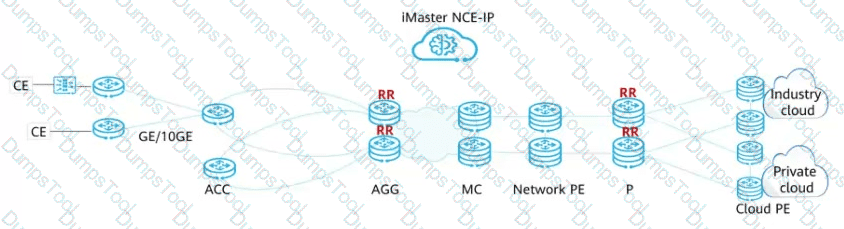
Exhibit 15.1 — Original topology/configuration figure
Select all that apply.
The ACC and AGG establish a BGP-LS peer relationship. The ACC uses IGP to flood information such as the topology, bandwidth, and link delay to the AGG.
The AGG establishes a BGP-LS peer relationship with the P on the cloud backbone network, and advertises information such as the collected topology, bandwidth, and link delay to the P through BGP-LS.
The MC, cloud PE, and network PE use IGP to flood information about the aggregation and core layers, such as the topology, bandwidth, and link delay, to the P. The P establishes a BGP-LS IPv6 peer relationship with iMaster NCE-IP, and uses BGP-LS to report the information to iMaster NCE-IP.
BGP-LS IPv6 is deployed between the headend of an SRv6 Policy and the RR and between the headend and the controller to deliver SRv6 Policy information.
Exact Extract — Huawei Training Material (Automatic SDN Network O & M, p.26):
“BGP-LS: BGP Link-state Protocol, BGP extension, which is used to summarize topology information collected by IGP and send the information to the upper-layer controller. This feature is mainly used when the controller computes paths in a centralized manner.”
Huawei Reference Verification:
Huawei's Automatic SDN O & M curriculum defines BGP-LS as a BGP extension that summarizes topology information collected by IGP and sends it to a controller for centralized path computation. The intelligent cloud bearer design collects access, aggregation, and core topology, including bandwidth and delay. It uses BGP-LS peering/reporting relationships from ACC through AGG and backbone reporting nodes toward iMaster NCE-IP. In contrast, policies computed by the controller are signaled through the BGP IPv6 SR Policy address family rather than BGP-LS. This distinction establishes A, B, C and excludes D in the depicted hierarchical reporting model.
Technical Deep Dive:
A, B and C are correct for the illustrated architecture. The access and aggregation layers provide IGP-distributed topology and traffic engineering data, including link state, metrics and delay. BGP-LS speakers transport relevant node, link and prefix information toward the backbone reporting devices and NCE. The controller uses this combined topology to compute SRv6 Policy segment lists meeting SLA constraints. Option D confuses topology reporting with policy distribution: BGP-LS exports network state; BGP IPv6 SR Policy conveys policy information to the headend for traffic steering. A BGP-LS route may encode link, node or prefix attributes but does not replace the SR Policy NLRI. Separating these address families allows a controller to obtain topology information independently of its chosen path-delivery mechanism. PCEP is another technology that can assist computation and LSP management in supported deployments.
───────────────────────────────────────────────────────

TESTED 21 Nov 2026
Copyright © 2014-2026 DumpsTool. All Rights Reserved