Spring Sale - Special 70% Discount Offer - Ends in 0d 00h 00m 00s - Coupon code: 70dumps

NEX Questions and Answers

Question # 6

An employee receives notification that their job is being eliminated. Upon hearing the news, the employee bangs a fist on the worktable and shouts loud curses and insults about management.

This reaction corresponds to which stage of the stress response pathway?

A.

Exhaustion

B.

Alarm

C.

Failure

D.

Resistance

Full Access
Question # 7

Which statement best explains why a child may resemble one parent more than the other?

A.

The genes of the dominant parent are expressed more vigorously.

B.

Older genetic material is weaker.

C.

One set of genes had more dominant characteristics.

D.

Larger eggs contain more genetic material.

Full Access
Question # 8

Which action is an example of inequity in healthcare?

A.

Providing flexible or extended healthcare appointment times

B.

Administering medication to all patients who report pain

C.

Filtering water for one segment of the community, but not another

D.

Distributing free school lunches to all students

Full Access
Question # 9

Which of the following describes hyperextension of a body part at a joint?

A.

The lateral movement away from the middle of the body (midline) in the frontal plane.

B.

The posterior movement away from the anatomical position in the sagittal plane.

C.

The anterior movement away from the anatomical position in the sagittal plane.

D.

The posterior movement back to the anatomical position in the sagittal plane.

Full Access
Question # 10

The figure below represents the human eye.
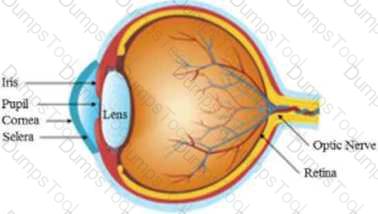
Where are the rods and cones located?

A.

Optic nerve

B.

Cornea

C.

Lens

D.

Retina

Full Access
Question # 11

Which of the following molecules is an electrolyte normally found in the blood?

A.

Iodine

B.

H₂O

C.

Ca²⁺

D.

Lactase

Full Access
Question # 12

Which of the following is the correct classification of a penny made only of copper?

A.

A pure substance that is a compound

B.

A heterogeneous mixture of two compounds

C.

A homogeneous mixture of two elements

D.

A pure substance that is an element

Full Access
Question # 13

What is the result of crossing over during meiosis?

A.

Homologous pairs of chromosomes have exchanged segments of their DNA.

B.

Non-sister chromatids of homologous pairs of chromosomes have formed a chiasmata.

C.

Members of homologous pairs of chromosomes have lined up along the metaphase plate.

D.

Homologous pairs of chromosomes have been randomly assorted along the metaphase plate.

Full Access
Question # 14

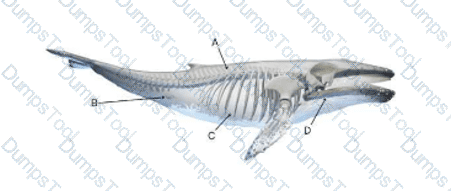
Review the image below.

Which is the best piece of evidence that the blue whale evolved from a mammal that once lived on land?

A.

A – spinal column

B.

C – rib cage

C.

B – vestigial leg bones

D.

D – jawbones

Full Access
Question # 15

Veins throughout the body contain structures, indicated by arrows, in the image below.

The structures shown in the image prevent which of the following from occurring?

A.

Forward flow of blood

B.

Obstruction of blood flow

C.

Backflow of blood

D.

Blood leaking into the interstitial spaces

Full Access
Question # 16

Which activity is the least effective method of preventing the spread of diarrheal infections?

A.

Isolating the patient

B.

Cleaning hands with an antibacterial solution

C.

Washing hands with soap and water

D.

Wearing a mask

Full Access
Question # 17

The table below shows the average daily requirements of essential amino acids in the diet at various stages of human life.
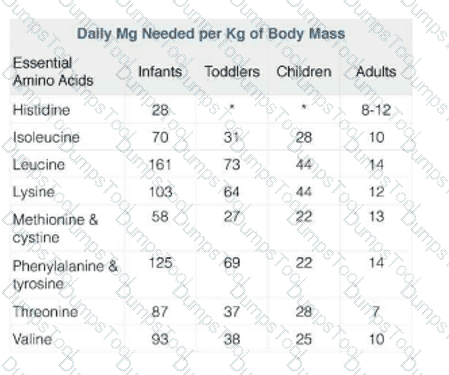
Which of these amino acids is required in the greatest amount in the diet of toddlers?

A.

Lysine

B.

Phenylalanine and tyrosine

C.

Leucine

D.

Valine

Full Access
Question # 18

The polar covalent bond of a water molecule (H₂O) is shown in the image.
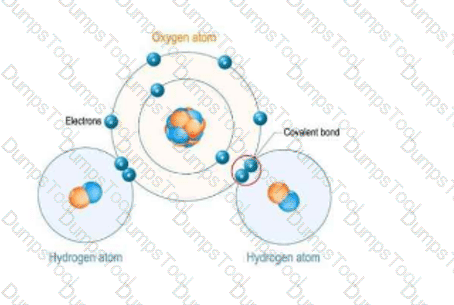
Which example demonstrates that water has polarity?

A.

When paddling through a stream, a kayaker uses the paddle to pull themselves through the water.

B.

Rainwater collects in the lowest places to form puddles.

C.

When water is poured into a container with oil, the water molecules stick together, keeping the water and oil separated.

D.

A magnet dropped in water sinks more slowly than a rock of the same size and weight.

Full Access
Question # 19

Reading Comprehension

Passage:

Preventive screenings can identify health problems before symptoms develop. Early detection often leads to more effective treatment and better outcomes.

What is the benefit of preventive screenings?

A.

Eliminating disease entirely

B.

Reducing healthcare visits

C.

Identifying problems early

D.

Avoiding medical treatment

Full Access
Question # 20

Reading Comprehension

Passage:

Time management is an important skill for students in demanding programs. Creating schedules, prioritizing tasks, and setting realistic goals can reduce stress and improve academic performance.

Which strategy is mentioned as a way to improve time management?

A.

Avoiding deadlines

B.

Prioritizing tasks

C.

Studying without breaks

D.

Working without schedules

Full Access
Question # 21

Word Knowledge

The word“initial”most nearly means:

A.

Final

B.

First

C.

Lasting

D.

Delayed

Full Access
Question # 22

Word Knowledge

The word“beneficial”most nearly means:

A.

Harmful

B.

Helpful

C.

Accidental

D.

Costly

Full Access
Question # 23

Reading Comprehension

Passage:

Public health campaigns often focus on smoking cessation because smoking is a leading cause of preventable disease. Reducing smoking rates can significantly lower the incidence of heart disease, lung cancer, and stroke.

Which outcome is directly associated with reducing smoking rates?

A.

Increased healthcare costs

B.

Higher infection rates

C.

Lower incidence of chronic disease

D.

Improved air quality indoors only

Full Access
Question # 24

Reading Comprehension

Passage:

Antibiotics are effective against bacterial infections but do not work against viruses. Misuse of antibiotics can contribute to antibiotic resistance, making infections harder to treat.

What is the primary purpose of the passage?

A.

To explain how viruses reproduce

B.

To promote antibiotic use for all illnesses

C.

To inform about proper antibiotic use

D.

To describe immune system disorders

Full Access
Question # 25

Word Knowledge

The word“restrict”most nearly means:

A.

Allow

B.

Expand

C.

Limit

D.

Encourage

Full Access
Question # 26

Word Knowledge

The word“minimize”most nearly means:

A.

Increase

B.

Balance

C.

Reduce

D.

Measure

Full Access
Question # 27

Reading Comprehension

Passage:

Exercise increases heart rate and improves circulation. Over time, regular physical activity strengthens the heart muscle and increases endurance.

Which effect of exercise is described in the passage?

A.

Reduced appetite

B.

Strengthened heart muscle

C.

Improved digestion

D.

Increased flexibility

Full Access
Question # 28

Reading Comprehension

Passage:

Medical research relies on controlled experiments to test hypotheses. By controlling variables, researchers can determine whether observed effects are due to the factor being studied.

Why are controlled experiments important?

A.

They eliminate the need for observation

B.

They ensure results are random

C.

They help identify cause-and-effect relationships

D.

They guarantee identical outcomes

Full Access
Question # 29

Word Knowledge

The word“monitor”most nearly means:

A.

Supervise or observe

B.

Repair

C.

Replace

D.

Ignore

Full Access
Question # 30

Reading Comprehension

Passage:

Adequate hydration is essential for maintaining normal body functions. Water helps regulate body temperature, transports nutrients, and removes waste products. Even mild dehydration can cause fatigue, headaches, and reduced concentration. Healthcare providers often emphasize proper fluid intake, especially for older adults, because the sensation of thirst decreases with age.

Which of the following is the main idea of the passage?

A.

Older adults rarely experience dehydration

B.

Water intake has little effect on body systems

C.

Hydration is important for overall health and bodily functions

D.

Thirst is the only indicator of dehydration

Full Access
Question # 31

Reading Comprehension

Passage:

Sleep deprivation can impair immune function, making individuals more susceptible to illness. Over time, chronic lack of sleep may increase the risk of serious health conditions.

Which statement is best supported by the passage?

A.

Sleep has no effect on immunity

B.

Illness always results from lack of sleep

C.

Adequate sleep supports immune health

D.

Immune function improves with stress

Full Access
Question # 32

Reading Comprehension

Passage:

Stress can affect both physical and mental health. Short-term stress may improve alertness, but chronic stress can weaken the immune system, increase blood pressure, and contribute to anxiety and depression.

Which effect of long-term stress is mentioned in the passage?

A.

Improved concentration

B.

Stronger immune response

C.

Increased blood pressure

D.

Faster healing

Full Access
Question # 33

Solve for x.

A.

B.

3

C.

−5

D.

−1

Full Access
Question # 34

The weight, in pounds (lb), of 8 infants is listed below:

8.5 lb, 11 lb, 7 lb, 5 lb, 7 lb, 4.5 lb, 9 lb, 8 lb

What is the mean weight of these infants?

A.

8 lb

B.

6.5 lb

C.

7.5 lb

D.

7 lb

Full Access
Question # 35

A car travels 15.6 miles on

3

4

4

3

of a gallon of gas. How many miles can the car travel on 5 gallons of gas?

A.

20.8 miles

B.

58.5 miles

C.

104 miles

D.

78 miles

Full Access
Question # 36

At a certain hospital, onlyof all births are twins. What percent is that?

A.

0.4%

B.

4%

C.

1.25%

D.

25%

Full Access
Question # 37

A patient is supposed to receive 5.6 centimeters (cm) of ointment. Given that 1 inch (in) = 2.54 cm, how many inches long will the application of ointment be?

Round to the nearest tenth.

A.

1.4 in

B.

22.0 in

C.

2.2 in

D.

14.2 in

Full Access
Question # 38

One day, a hospital admitted 75 female and 45 male patients. What fraction of all patients admitted that day were female?

A.

3/5

B.

4/7

C.

5/8

D.

2/5

Full Access
Question # 39

The first recovery phase for a patient after surgery is walking for 12 weeks. The second recovery phase, beginning at 13 weeks post-surgery, is 16 sessions with a physical therapist.

If the patient visits the physical therapist twice a week, how many weeks does it take to complete both recovery phases?

A.

20 weeks

B.

28 weeks

C.

14 weeks

D.

24 weeks

Full Access
Question # 40

Three nurses work a combined total of 130 hours each week. If Nurse A worked 5 days forhours each day, and Nurse B worked 4 days forhours each day, how many hours did Nurse C work?

A.

hours

B.

hours

C.

hours

D.

hours

Full Access
Question # 41

Prepared bottles contain 120 milliliters (mL) of infant formula. An infant drinksbottle every 2 hours for each of their 6 daytime feedings.

Given 1 ounce = 30 mL, how many ounces did the infant drink?

A.

2

B.

24

C.

12

D.

360

Full Access
Question # 42

Which fraction is equal to 0.04?

A.

1/4

B.

2/5

C.

2/50

D.

2/500

Full Access
Question # 43

An acid needs to be diluted at a ratio of 5 grams of acid per 3 liters of water. How many grams of acid are needed for a solution of 24 liters of water to maintain the ratio?

A.

1.6 grams

B.

360 grams

C.

40 grams

D.

14.4 grams

Full Access
Question # 44

A healthcare provider recommends that a patient take 200 milligrams (mg) of a pain reliever every 4 hours. How many grams of the pain reliever should the patient have taken after 8 hours if the recommendation was followed?

(Given 1,000 mg = 1 gram.)

A.

20 grams

B.

0.2 grams

C.

40 grams

D.

0.4 grams

Full Access
Question # 45

According to the Centers for Disease Control and Prevention (CDC), approximately 7% of children and adolescents ages 6 to 19 in the United States have a high total cholesterol. If 120,000 children and adolescents in that age range were sampled, approximately how many of them would have a normal total cholesterol?

A.

8,400

B.

113,000

C.

84,000

D.

111,600

Full Access
Question # 46

A hospital spends $364,468 per year (52 weeks) on electricity. On average, how much does it spend per week on electricity?

A.

$79

B.

$709

C.

$7,009

D.

$7,090

Full Access