dumpstool logo

You manage an Azure Machine Learning workspace named workspace!.
You plan to author custom pipeline components by using Azure Machine Learning Python SDK v2.
You must transform the Python code into a YAML specification that can be processed by the pipeline service.
You need to import the Python library that provides the transformation functionality.
Which Python library should you import?
A team provisions an Azure Machine Learning environment by triggering pull requests.
Deployments must be automated, auditable, and require approval before running.
You need to select a deployment automation tool.
Which tool should you use?
You are using Azure Machine Learning to monitor a trained and deployed model. You implement Event Grid to respond to Azure Machine Learning events.
Model performance has degraded due to model input data changes.
You need to trigger a remediation ML pipeline based on an Azure Machine Learning event.
Which event should you use?
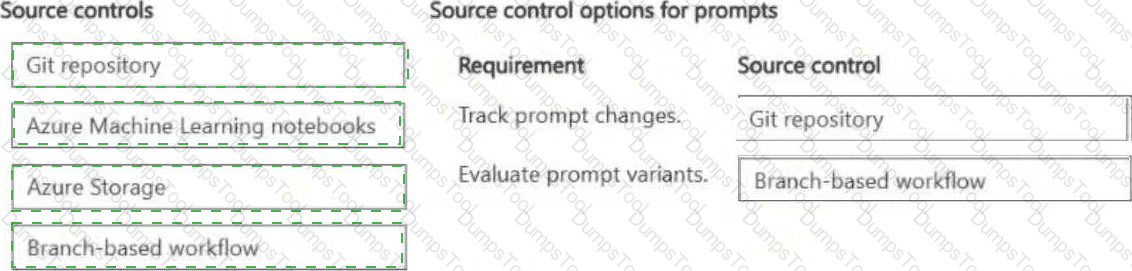
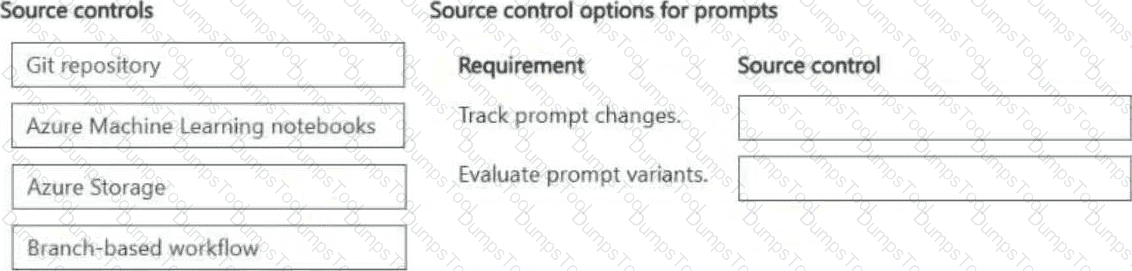
A team iterates prompts used by a generative AI agent. The team must support internal review before releasing changes.
The team must:
Track prompt changes with a clear history for audit and rollback.
Compare prompt variants in parallel without affecting the prompt used in the production environment.
You need to select the appropriate source control approach for each requirement.
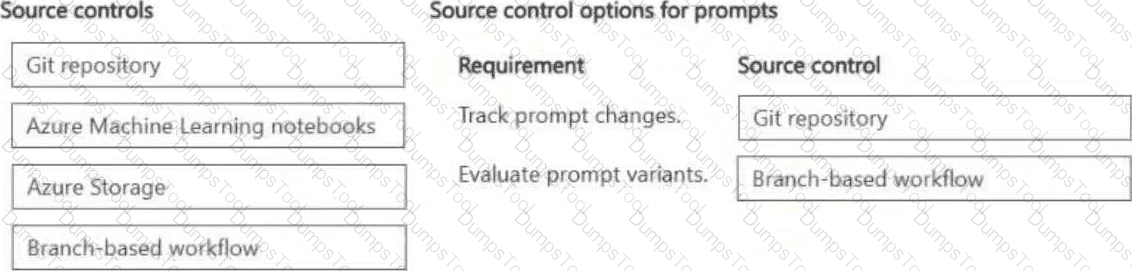
What should you use for each requirement? To answer, move the appropriate source controls to the correct requirements. You may use each source control once, more than once, or not at all. You may need to move the split bar between panes or scroll to view content. NOTE: Each correct selection is worth one point.
You manage an Azure Machine Learning workspace.
You must create and configure a compute cluster for a training job by using Python SDK v2.
You need to create a persistent Azure Machine Learning compute resource, specifying the fewest possible properties.
Which two properties should you define? Each correct answer presents part of the solution.
NOTE: Each correct selection is worth one point.
You create an MLflow model
You must deploy the model to Azure Machine Learning for batch inference.
You need to create the batch deployment.
Which two components should you use? Each correct answer presents a complete solution.
NOTE: Each correct selection is worth one point
A team is deploying machine learning models to a production inference endpoint in Azure Machine Learning.
The team requires a safe way to validate a new model version without disrupting existing users.
You need to recommend a deployment strategy for controlled testing of a new model version.
What should you configure?
You have an Azure Machine Learning workspace that includes an AmICompute cluster and a batch endpoint. You clone a repository that contains an MLflow model to your local computer. You need to ensure that you can deploy the model to the batch endpoint.
Solution: Create a data asset in the workspace.
Does the solution meet the goal?
-
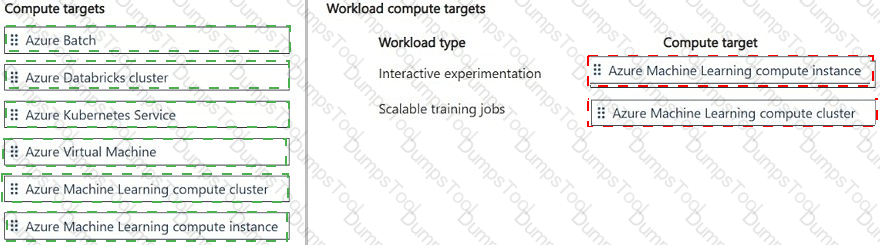
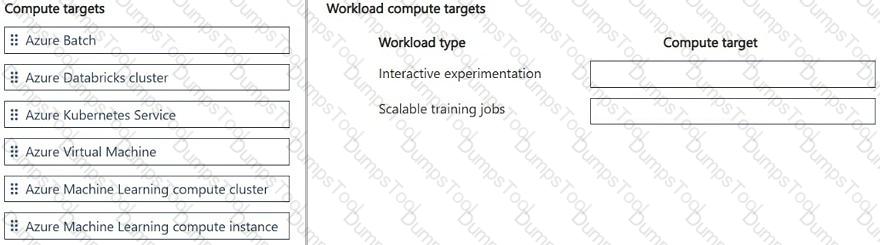
A team performs interactive experimentation during development. The team also runs scalable jobs for model training.
The team must minimize costs while ensuring compute resources scale when needed. Different workloads require different compute behaviors within the same workspace.
You need to configure compute targets that support each workload.
Which compute targets should you use? To answer, move the appropriate compute targets to the correct workload types. You may use each compute target once, more than once, or not at all. You may need to move the split bar between panes or scroll to view content.
NOTE: Each correct selection is worth one point.
Fabrikam Inc. needs to improve the performance of a GPT-5 model based on the stated technical requirements.
Which action should you perform first?
-
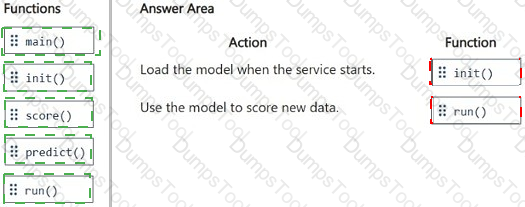
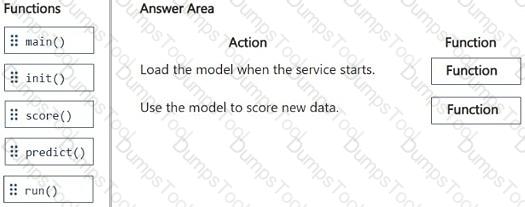
You use Azure Machine Learning to deploy a model as a real-time web service.
You need to create an entry script for the service that ensures that the model is loaded when the service starts and is used to score new data as it is received.
Which functions should you include in the script? To answer, drag the appropriate functions to the correct actions. Each function may be used once, more than once, or not at all. You may need to drag the split bar between panes or scroll to view content.
NOTE: Each correct selection is worth one point.
You manage an Azure Machine Learning workspace.
You experiment with an MLflow model that trains interactively by using a notebook in the workspace. You need to log dictionary type artifacts of the experiments in Azure Machine Learning by using MLflow. Which syntax should you use?
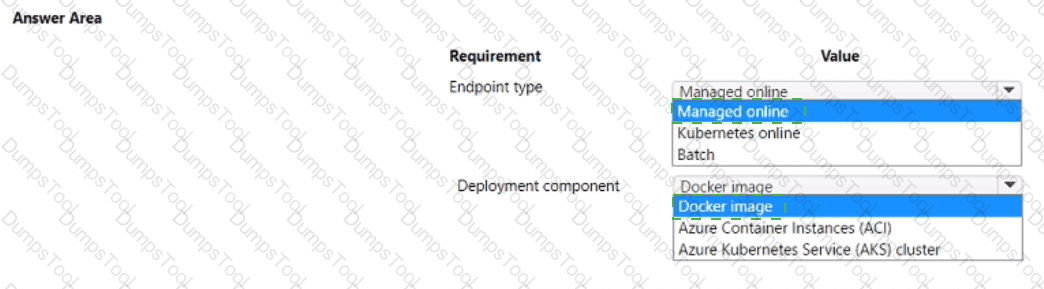
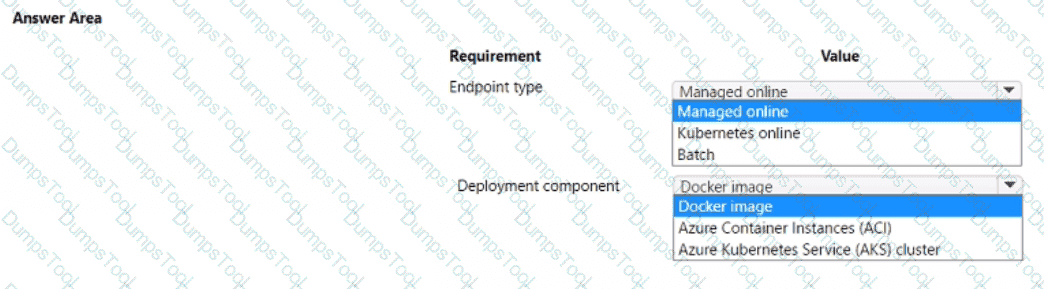
You create an Azure Machine Learning model to include model files and a scorning script. You must deploy the model. The deployment solution must meet the following requirements:
• Provide near real-time inferencing.
• Enable endpoint and deployment level cost estimates.
• Support logging to Azure Log Analytics.
You need to configure the deployment solution.
What should you configure? To answer, select the appropriate options in the answer area.
NOTE: Each correct selection is worth one point.
A Retrieval-Augmented Generation (RAG) solution returns incomplete answers because relevant content is inconsistently retrieved from the knowledge source.
You need to improve RAG accuracy without changing the embedding model currently in use. You need to achieve this goal while minimizing operational costs.
Which two actions should you perform? Each correct answer presents part of the solution. NOTE: Each correct selection is worth one point. Choose two.
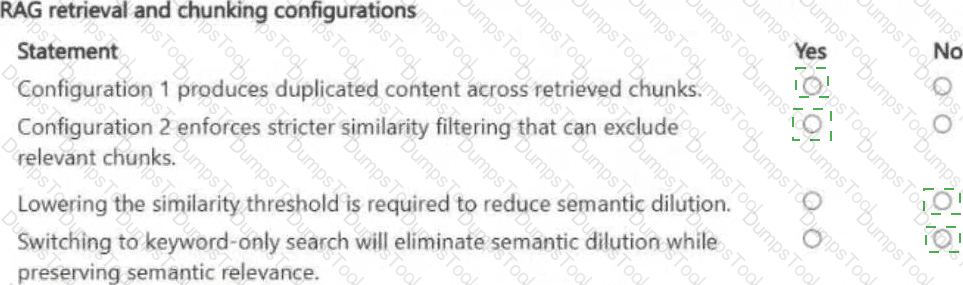
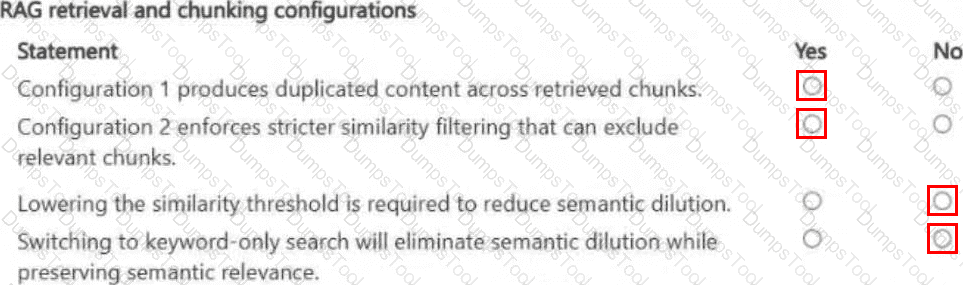
You manage a Retrieval-Augmented Generation (RAG) system that retrieves internal policy documents from a vector index.
Recent analysis shows that:
Retrieved results frequently include duplicated content from the same document.
Retrieved chunks sometimes span unrelated policy sections.
You review the following retrieval and ingestion configurations:
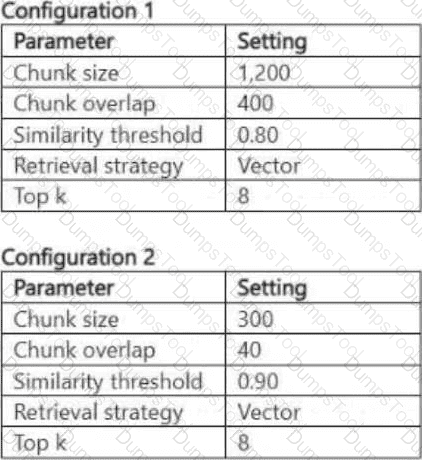
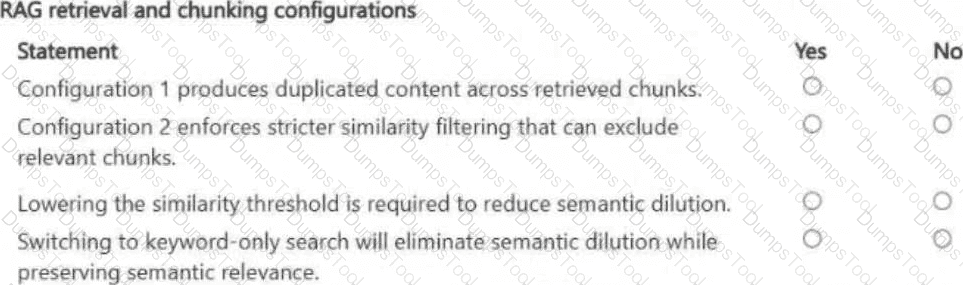
You need to reduce duplicated retrieval results and improve chunk relevance across policy sections.
For each of the following statements, select Yes if the statement is true. Otherwise, select No. NOTE: Each correct selection is worth one point.
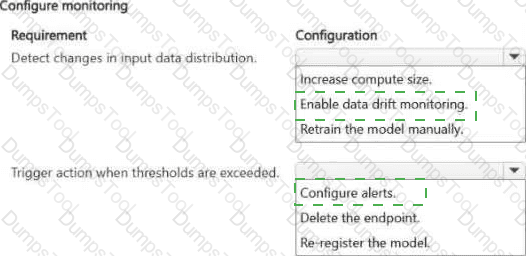
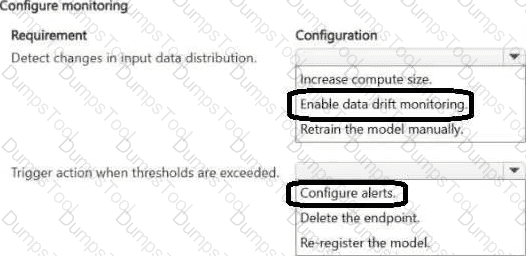
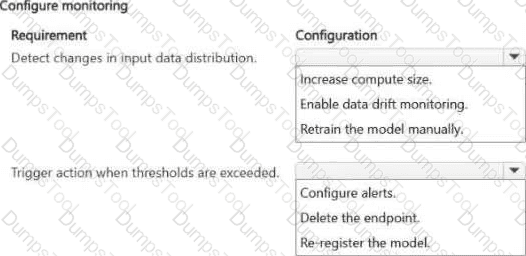
A machine learning model is deployed to production in Azure Machine Learning and is actively serving predictions for a business application. The model was trained by using a historical dataset that represented expected input patterns at the time of deployment.
The team working on the model must ensure the following:
Changes in input data distribution are detected.
Appropriate actions are triggered when predefined thresholds are exceeded.
You need to configure monitoring to meet the requirements.
Which configuration should you use for each requirement? To answer, select the appropriate options in the answer area. NOTE: Each correct selection is worth one point.
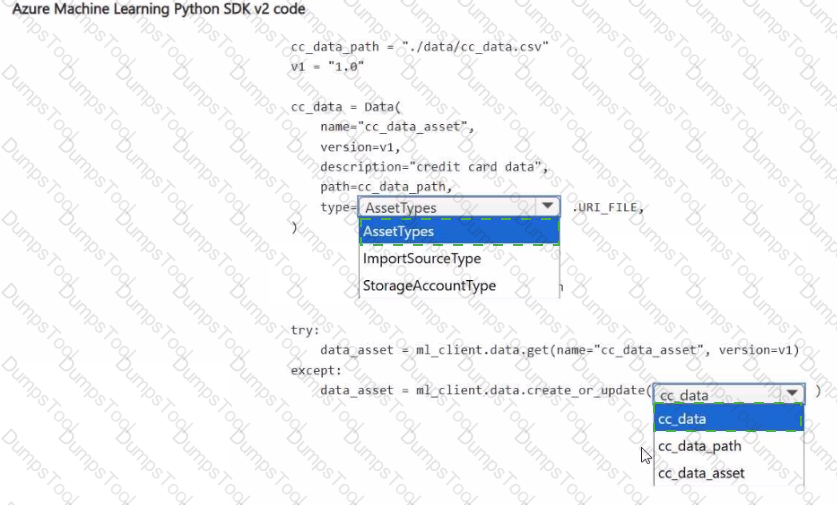
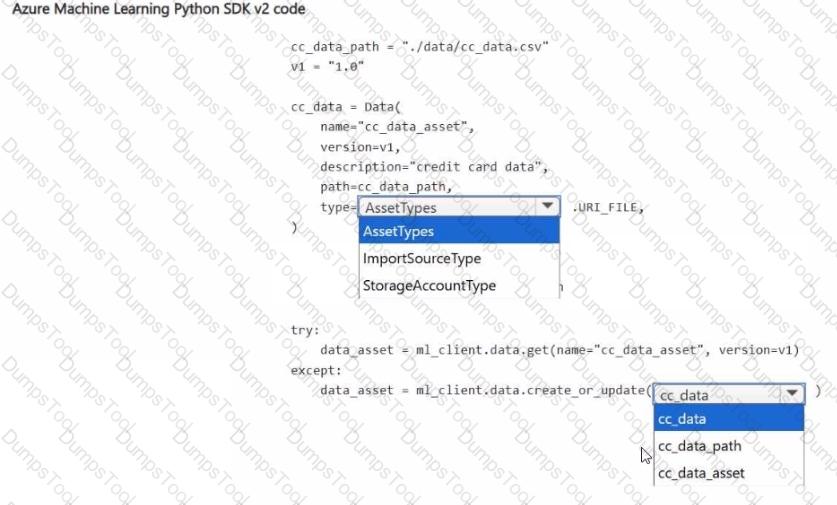
You have an Azure Machine Learning workspace and a data source file ./data/cc_data.csv in the local storage.
You plan to use Azure Machine Learning Python SDK v2 to store the content of the cc.data.csv file in a data asset named cc_data_asset in the workspace.
You write code to connect to the workspace and import all required libraries.
You need to complete the remaining code to ensure it will result in the cc_data_asset that contains the data from cc_data.csv.
How should you complete the code? To answer, select the appropriate options in the answer area.
NOTE: Each correct selection is worth one point.
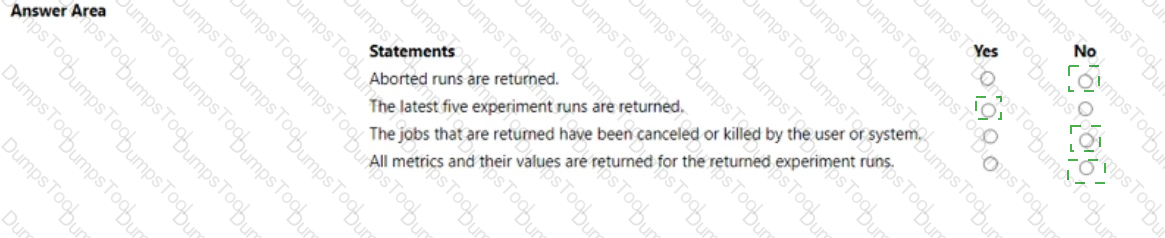
You manage an Azure Machine Learning workspace. You create an experiment named experiment1 by using the Azure Machine Learning Python SDK v2 and MLflow.
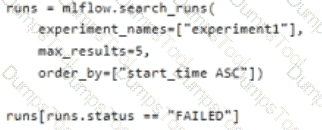
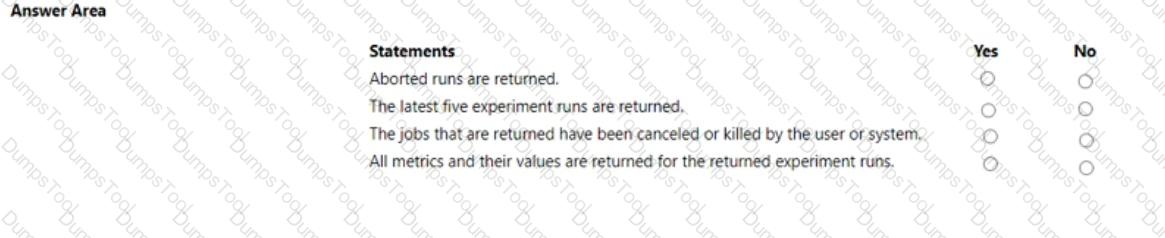
For each of the following statements, select Yes if the statement is true. Otherwise, select No.
A team plans to deploy a large foundation model in Microsoft Foundry as part of a new enterprise AI capability.
Different business units across the team ' s organization will access the model from various internal applications.
You need to deploy a foundation model by minimizing latency.
Which deployment type should you use?
You need to recommend an experiment-tracking strategy that ensures consistent experiment results.
What should you recommend?
You need to standardize how Fabrikam Inc. manages machine learning assets.
Which action should you perform first?
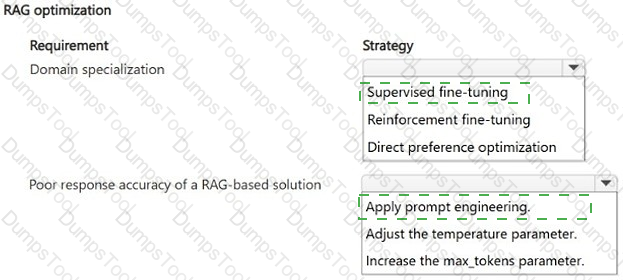
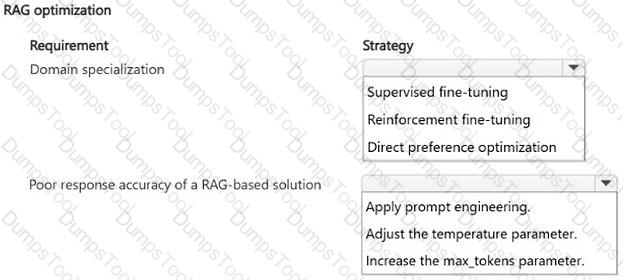
You need to configure an optimization method to meet Fabrikam Inc.’s technical requirements.
Which strategy should you apply first? To answer, select the appropriate options in the answer area.
NOTE: Each correct selection is worth one point.
Fabrikam Inc. must improve its deployment process because traditional machine learning models are deployed manually and the organization has limited rollback capability .
You need to recommend a deployment approach that supports staged rollout and rollback while minimizing operational overhead.
Which deployment approach should you recommend?

TESTED 06 Oct 2026