
Winter Sale - Special Limited Time 65% Discount Offer - Ends in 0d 00h 00m 00s - Coupon code: dpt65

WRT Questions and Answers

Question # 6

In a room that measures 15 feet × 25 feet with the entire floor wet, minimal wicking up the walls (less than 2 feet), and no offsets; initially, how many air movers should be added?

A.

1–3

B.

4–6

C.

7–9

D.

10–12

Full Access
Question # 7

What steps should be taken to minimize safety concerns with sagging gypsum board ceilings and promote rapid drying?

A.

Drain, safely remove, and properly dispose

B.

Perforate to increase airflow while drying

C.

Drain, properly dry the gypsum, and reinstall

D.

Support to prevent collapse while drying

Full Access
Question # 8

What is the atmospheric condition with the lowest humidity ratio?

A.

40°F (4°C) and 80% RH

B.

70°F (21°C) and 80% RH

C.

80°F (27°C) and 60% RH

D.

90°F (32°C) and 30% RH

Full Access
Question # 9

If the ambient temperature is below 50°F, what is the most effective type of dehumidifier to use when drying a structure?

A.

Gas bypass dehumidifier

B.

Low-grain refrigerant dehumidifier

C.

Conventional dehumidifier

D.

Desiccant dehumidifier

Full Access
Question # 10

When should water damage restoration services begin?

A.

After the damage survey has been submitted

B.

After a restorer entered into a properly written contract

C.

After equipment and consumables arrive on-site

D.

After the drying standard has been determined

Full Access
Question # 11

Typically, what can cause delamination when carpet is wet?

A.

Ambient conditions above dew point temperature

B.

Excessive tuft bind and shrinkage while drying

C.

Improper application of antimicrobials

D.

Improper handling and disengaging

Full Access
Question # 12

Where should a restorer inspect in a water-damaged structure?

A.

Areas where odors exist

B.

Locations where water is visible

C.

Rooms the customer says were affected

D.

All potentially affected areas

Full Access
Question # 13

What shall a restorer make the first priority during the initial inspection process?

A.

Removing the excess water

B.

Checking for moisture in walls

C.

Conducting a hazard assessment

D.

Turning on the HVAC system

Full Access
Question # 14

What is the term for the force exerted by water molecules in the air on surrounding surfaces?

A.

Relative humidity

B.

Vapor pressure

C.

Dew point

D.

Humidity ratio

Full Access
Question # 15

What should a technician do in a Category 3 water intrusion when high-risk individuals are present?

A.

Retain an Indoor Environmental Professional (IEP)

B.

Install additional air movers and dehumidifiers

C.

Always perform a mold test to verify remediation effectiveness

D.

Be primarily concerned with the dehumidifier’s AHAM rating

Full Access
Question # 16

A technician has arrived at a large vacant home where the basement is lightly affected and is considered a Class 1. There are six LGR dehumidifiers on the truck that each have an AHAM rating of 110 pints per day (PPD). How many are initially recommended to be placed if the affected area is 22,000 cubic feet?

A.

1

B.

2

C.

4

D.

6

Full Access
Question # 17

Which material should be discarded when affected by Category 2 water?

A.

Wood framing

B.

Plywood subfloor

C.

Oriental rugs

D.

Carpet cushion

Full Access
Question # 18

Which of the following is defined as removing water vapor from the air?

A.

Dehumidification

B.

Evaporation

C.

Humidification

D.

Diffusion

Full Access
Question # 19

How shall a technician use government-registered antimicrobials (biocides)?

A.

Estimate the proper dilution

B.

Combine with an acidic cleaner

C.

Follow the label directions

D.

Dilute the product to increase the effect

Full Access
Question # 20

Which is typically a result of introducing warm, dry air movement into wall cavities?

A.

Decreased rate of evaporation

B.

Negative pressure within the chamber wall

C.

Decreased temperature within the chamber

D.

Increased rate of evaporation

Full Access
Question # 21

SCENARIO: Use the diagram and information below to answer this question.
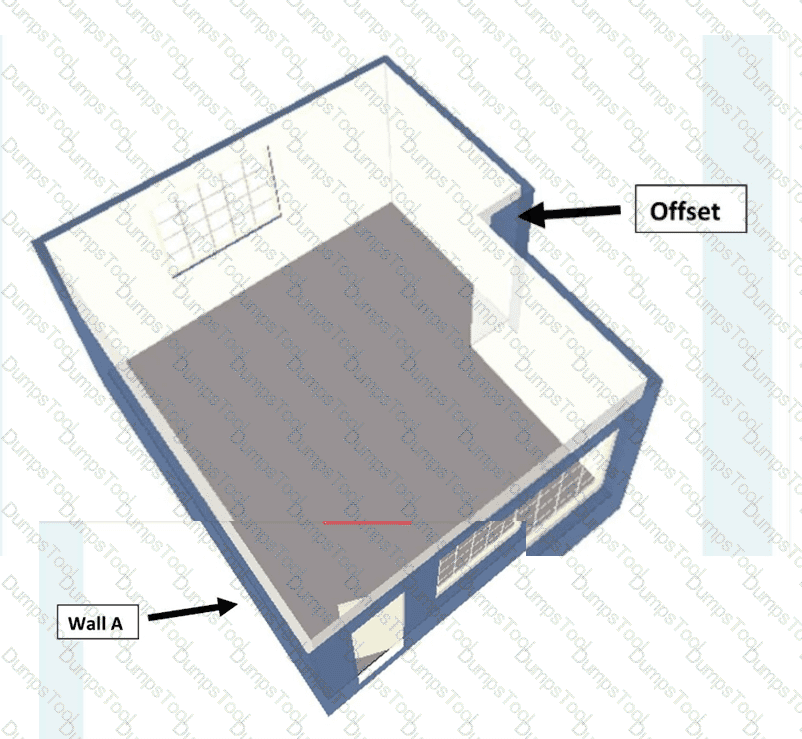
. The living room measures 20 feet x 16 feet, with an offset measuring 10 feet x 2 feet.

. The ceiling height is 8 feet.

. The entire floor area is wet, and moisture has been detected as high as 21 inches on all walls except Wall A.

. Water escaped from a broken pipe located behind Wall A. The entire area of wall A is wet.

. The ceiling is not affected.

Important information:

. The total square footage of the floor, including the offset, is 340 square feet

. The total square footage of Wall A after deducting the bottom 2 feet is 120 square feet

(USE THE SCENARIO) What is the total number of airmovers a restorer should install?

A.

Low Range 5, High Range 8

B.

Low Range 7, High Range 10

C.

Low Range 8, High Range 11

D.

Total of 12

Full Access
Question # 22

Which of the following documents should be obtained for a water mitigation project?

A.

Permission from local and state law enforcement

B.

Detailed history of previous restoration projects

C.

Dehumidifier manufacturer’s AHAM certificate

D.

Documents to validate the drying and completion

Full Access
Question # 23

What happens to the surface of a wet material as moisture evaporates?

A.

The surface becomes cooler

B.

The surface becomes warmer

C.

The surface becomes non-porous

D.

The surface becomes porous

Full Access
Question # 24

If indoor conditions are 90°F (32°C) and 60% relative humidity, at what surface temperature does condensation begin to occur?

A.

52°F (11°C)

B.

58°F (14°C)

C.

74°F (23°C)

D.

88°F (31°C)

Full Access
Question # 25

Which term describes the rate of water vapor passing through a material?

A.

Capillarity

B.

Permeance

C.

Condensation

D.

Wicking

Full Access