dumpstool logo

A FortiGate administrator is troubleshooting a VPN that is failing to establish.
As a first step, the administrator is attempting to sniff the traffic using the command:
# diagnose sniffer packet any ‘’udp port 500 or udp port 4500 or esp’’ 4
After several minutes there is still no output. What is the most Likely reason for this?
You want to configure two static routes: one that references a zone and a second one that references an SD-WAN member that belongs to that zone.
Which statement about this scenario is true? (Choose one answer.)
In a Security Fabric environment which three actions must you take to ensure successful communication among the nodes? (Choose three.)
Refer to the exhibit.
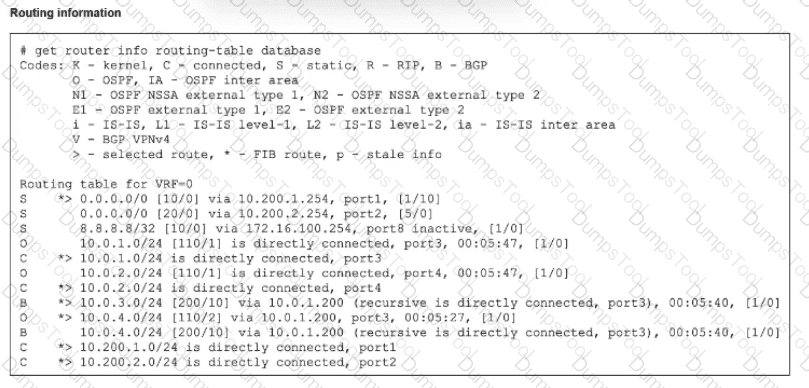
The modified output of live routing kemel is shown
Which two statements about the output are (rue? (Choose two.)
Refer to the exhibits.
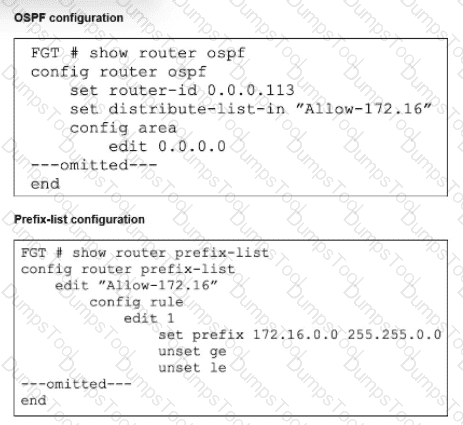
An OSPF peer is advertising route 172.16.52.0/24. The local FortiGate is configured with an inbound distribution list that allows the 172.16.0.0/16 network to be injected into its routing table. However, the 1 ' 2.16.52.0/24 subnet cannot be seen in the FIB.
Which two stops can the administrator of the local FortiGate take to ensure that the advertised 172.16. 52.0/24 subnet will be injected into the routing table? (Choose two.)
You want to harden the SSL/SSH inspection profile for access to HTTPS web servers.
Which two configuration changes allow you to remove vulnerabilities? (Choose two answers.)
Refer to the exhibit, which shows the output of get router info ospf neighbor.
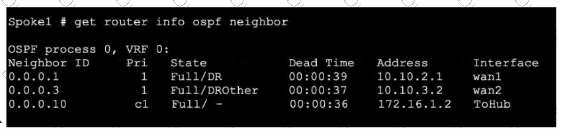
What can you conclude from the command output?
Which three factors about service-level agreement (SLA) targets and SD-WAN rules should you consider when configuring SD-WAN rules? (Choose three.)
Consider the scenario where the server name indication (SNI) does not match either the common name (CN) or any of the subject alternative names (SAN) in the server certificate. Which two actions will FortiGate take when using the default settings for SSL certificate inspection? (Choose two answers)
If you configure set tcp-mss-sender and set tcp-mss-receiver in a firewall policy, how does it affect the size and handling of TCP packets in the network?
Exhibit.

Refer to the exhibit, which shows two entries that were generated in the FSSO collector agent logs.eeeeeeeeeeeeeeeeeeeeeeeeeeeeeeeeeeeeeeeeeeeeeeeeeeeeeeeeeeeeeeeeeeeeeee
What three conclusions can you draw from these log entries? {Choose three.)
Which two protocol states indicate that traffic is bidirectional? (Choose two.)
Which three conditions are required for two FortiGate devices to form an OSPF adjacency? (Choose three answers)
Refer to the exhibits.
Exhibit — Interface configuration and FortiGate routing table
Video exhibit showing port2 preserve-session-route configuration and the FortiGate routing table with two default routes.
The administrator increases the member priority on port2 to 20.
Assuming the route egressing port2 is still valid, upon configuration changes and the receipt of new packets, which two actions does FortiGate perform on existing sessions established over port2? (Choose two.)
Exhibit.
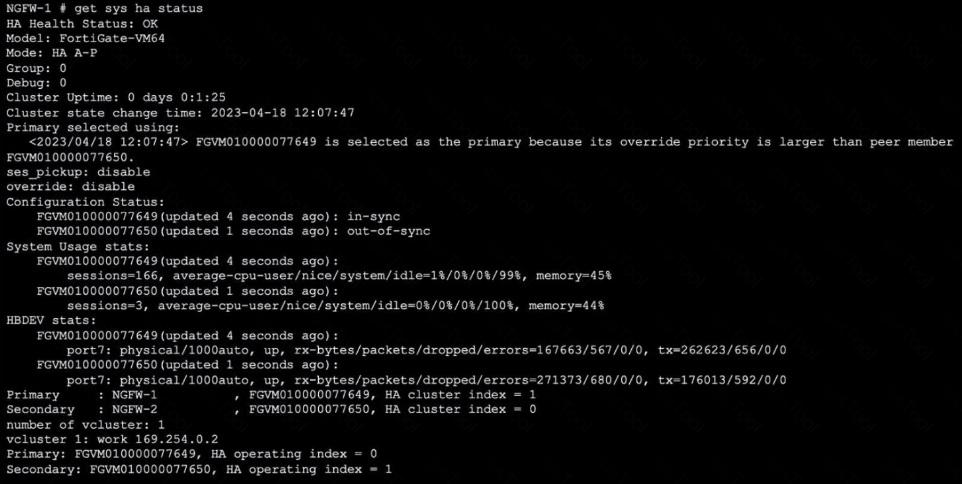
Refer to the exhibit, which shows the output of get system ha status.
NGFW-1 and NGFW-2 have been up for a week.
Which two statements about the output are true? (Choose two.)
The local OSPF router is unable to establish adjacency with a peer.
Which two things should the administrator do to troubleshoot the issue? (Choose two.)
You are checking an enterprise network and see a suspicious packet with the MAC address 00:09:0f:09:18:81.
Which two statements about the suspicious packet are correct? (Choose two.)
Refer to the exhibits.
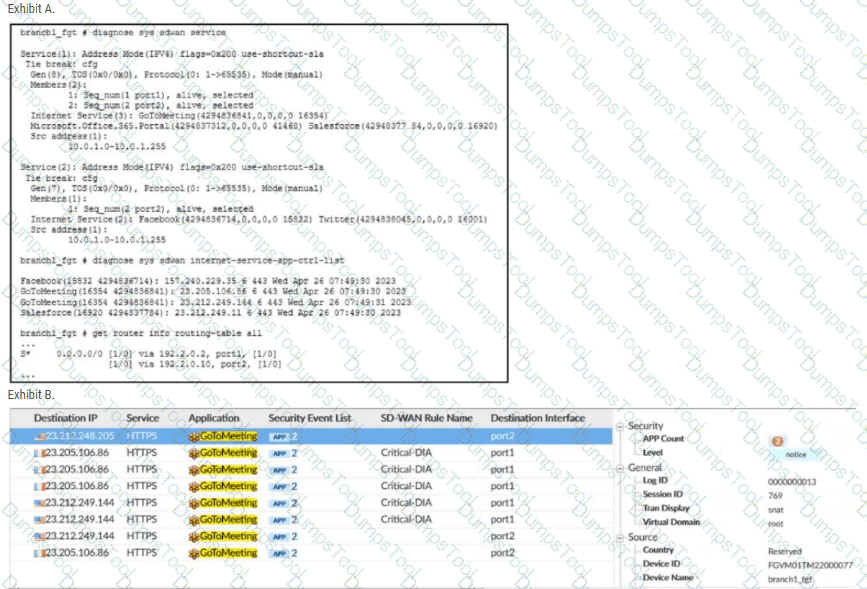
An administrator is testing application steering in SD-WAN. Before generating test traffic, the administrator collected the SD-WAN service and ISDB application-cache information shown in the first exhibit. After generating GoToMeeting test traffic, the administrator examined the corresponding traffic logs on FortiAnalyzer.
The administrator noticed that some traffic matched the implicit SD-WAN rule, but expected the traffic to match rule ID 1.
Which two reasons explain why some log messages show that the traffic matched the implicit SD-WAN rule? (Choose two.)
Refer to the exhibit.
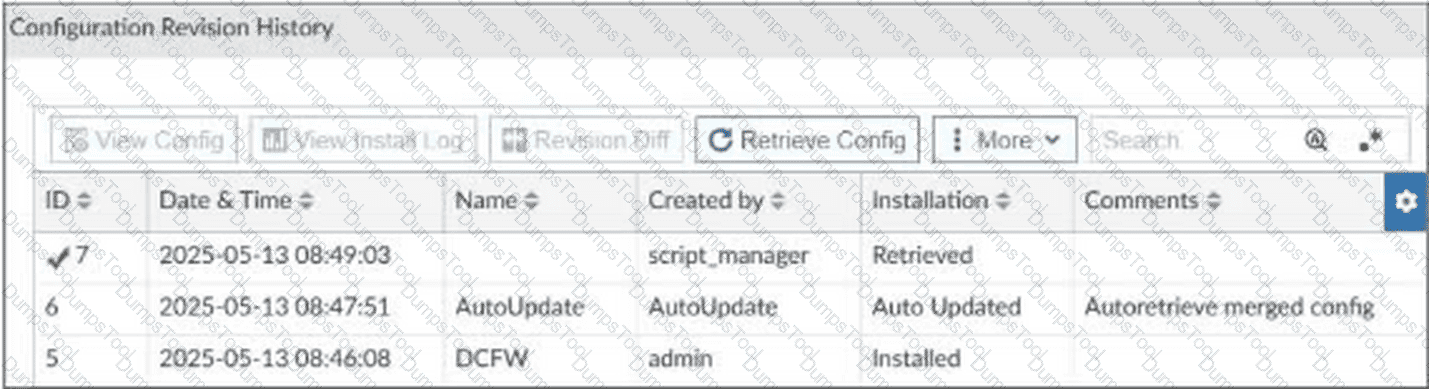
A revision history window at the FortiManager device layer is shown.
The IT team is trying to identify the administrator responsible for the most recent update to the FortiGate device database.
What can the IT team conclude?
Refer to the exhibit.
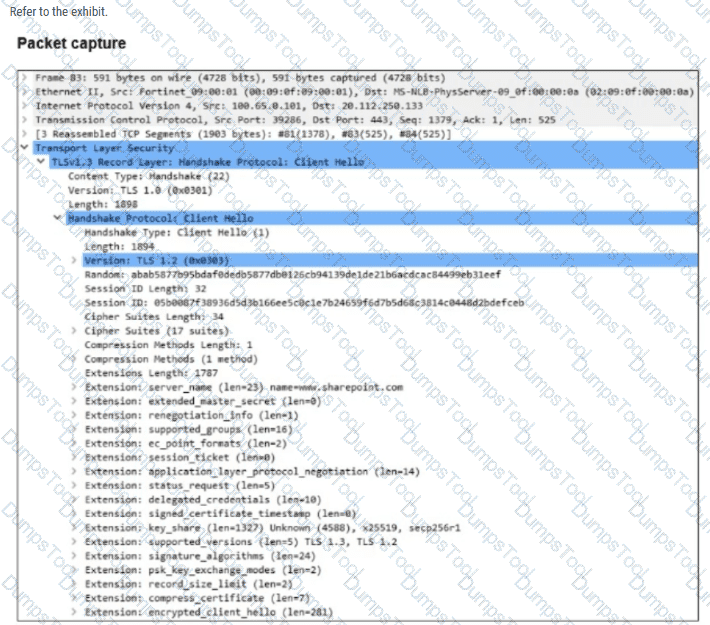
The packet capture output of a ClientHello message is shown.
You are updating a firewall policy that includes SSL certificate inspection. You are capturing packets from traffic passing through this firewall policy.
Which two statements about the packet capture are correct? (Choose two.)
Refer to the exhibits.
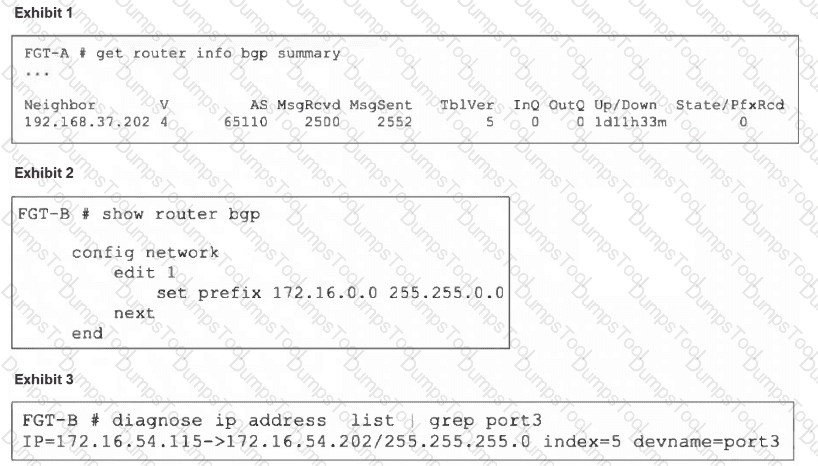
An administrator is attempting to advertise the network configured on port3. However, FGT-A is not receiving the prefix.
Which two actions can the administrator take to fix this problem? (Choose two.)
Refer to the exhibits.
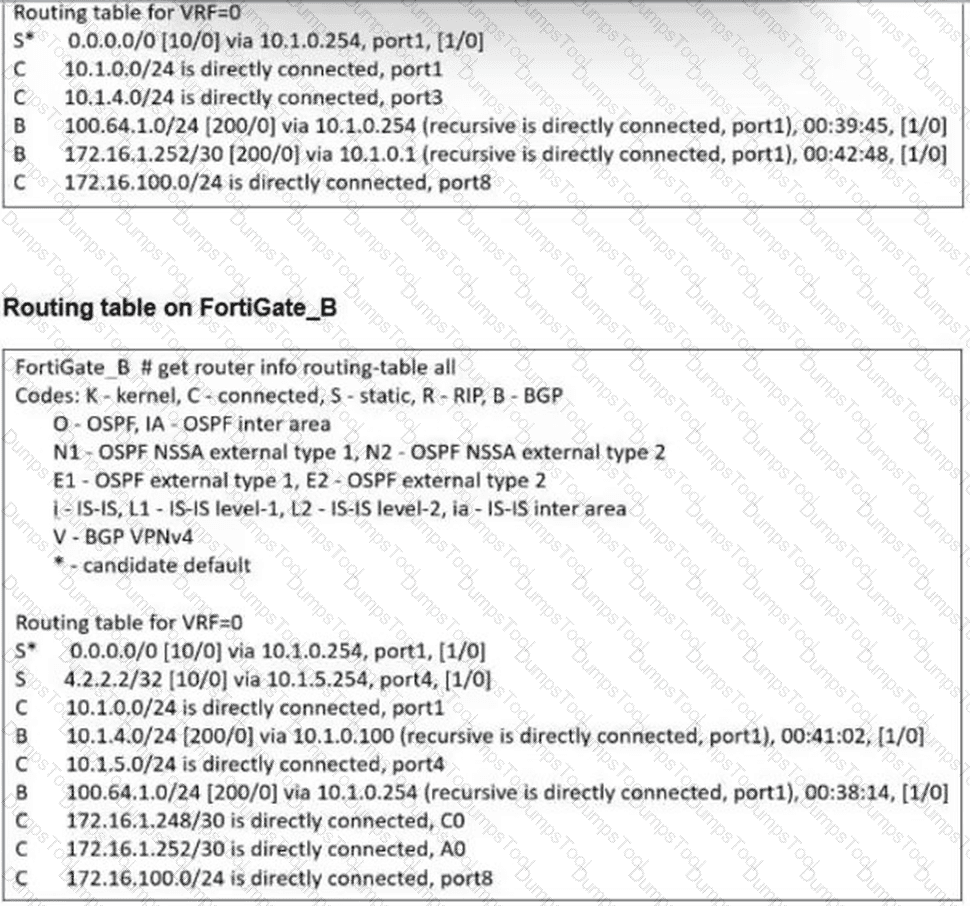
Exhibit — Routing tables of FortiGate_A and FortiGate_B
The routing tables of FortiGate_A and FortiGate_B are shown.
FortiGate_A and FortiGate_B are in the same autonomous system.
You want to add only route 172.16.1.248/30 on FortiGate_A by updating the BGP configuration.
Which configuration must you apply?
In the context of SD-WAN, the terms underlay and overlay are commonly used to categorize links.
Which two statements about underlay and overlay links are correct? (Choose two.)
You have a FortiGate configuration with three user-defined SD-WAN zones and two members in each of these zones. One SD-WAN member is no longer in use in health-check and SD-WAN rules. You want to delete it.
What happens if you delete the SD-WAN member from the FortiGate GUI?
During the SAML negotiation process, in which section does the Identity Provider (IdP) provide the SAML attributes used in the authentication process to the Service Provider (SP)?
An administrator wants to capture encrypted phase 2 traffic between two FotiGate devices using the built-in sniffer.
If the administrator knows that there Is no NAT device located between both FortiGate devices, which command should the administrator run?
Refer to the exhibit.

An administrator has configured a firewall policy to use proxy-based inspection mode. What could explain the messages observed in the debug flow output?
Exhibit.
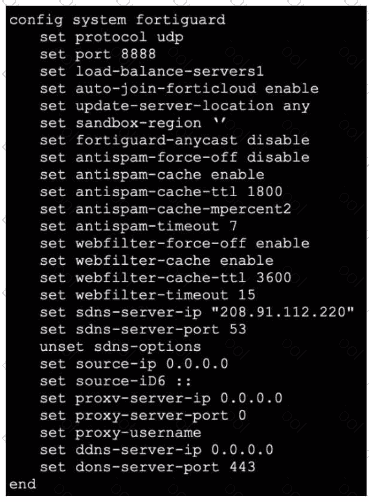
Refer to the exhibit, which shows a FortiGate configuration.
An administrator is troubleshooting a web filter issue on FortiGate. The administrator has configured a web filter profile and applied it to a policy; however the web filter is not inspecting any traffic that is passing through the policy.
What must the administrator do to fix the issue?
Which two statements about Security Fabric communications are true? (Choose two.)
Refer to the exhibit, which shows the output of a diagnose command.
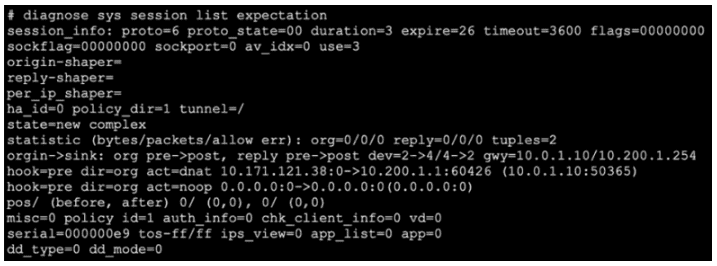
What two conclusions can you draw from the output shown in the exhibit? (Choose two answers)
Refer to the exhibit.
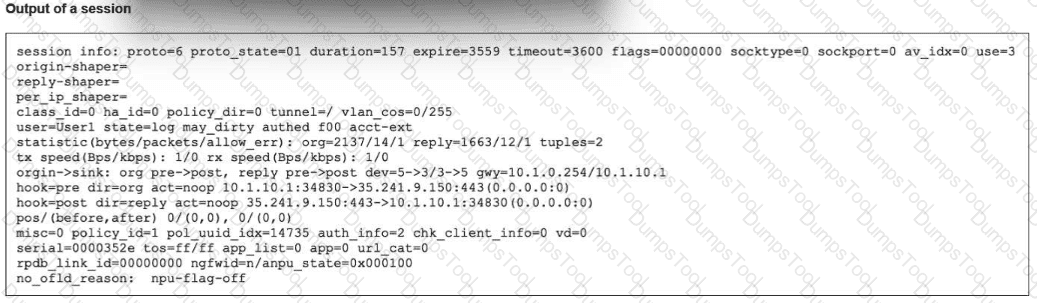
The exhibit shows the output of a session. Which two statements are correct? (Choose two.)
When FortiGate enters conserve mode because of memory pressure, which action can FortiGate perform to preserve memory?
While troubleshooting a FortiGate web filter issue, users report that they cannot access any websites, even though those sites are not explicitly blocked by any web filter profiles that are applied to firewall policies.
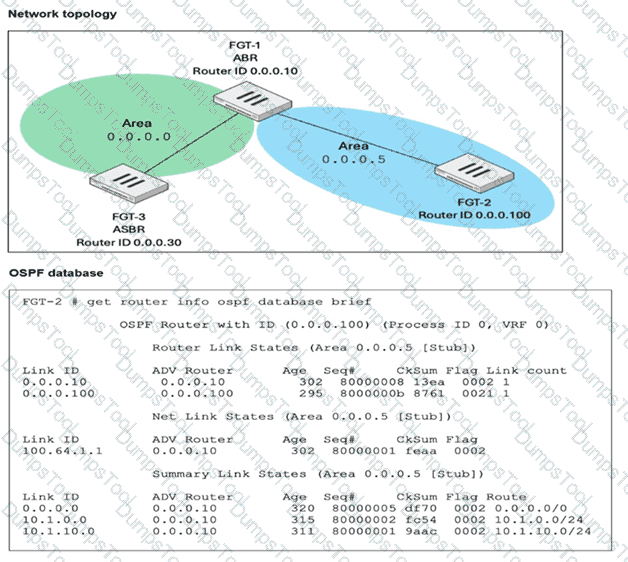
What are the three most likely reasons for this behavior? (Choose three answers)
Refer to the exhibit.
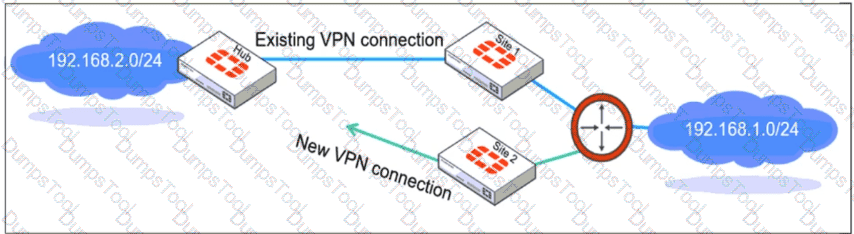
The network diagram shows the addition of Site 2 with an overlapping network segment to the existing IPsec VPN connection between the hub and Site 1.
Which IPsec phase 2 configuration must you make on the FortiGate hub to enable equal-cost multipath (ECMP) routing when multiple remote sites connect with overlapping subnets?
Refer to the exhibit.
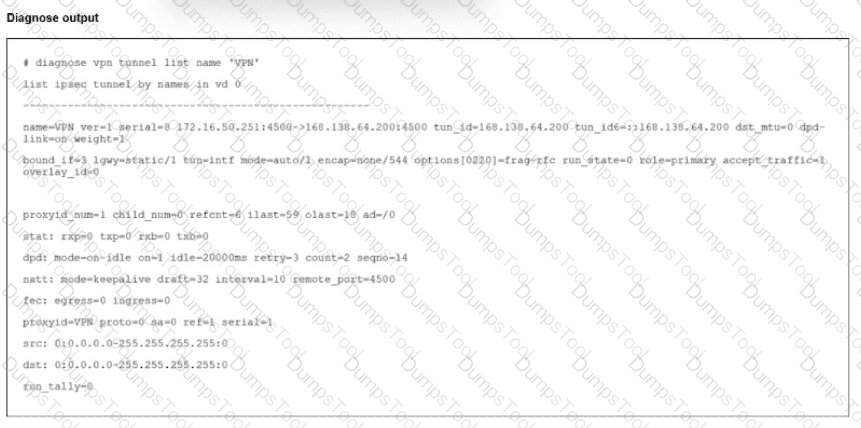
The output of the command diagnose vpn tunnels liar is shown.
Which two statements accurately describe the status of the tunnel? (Choose two.)
Refer to the exhibit.
The output of a BGO debug command is shown.
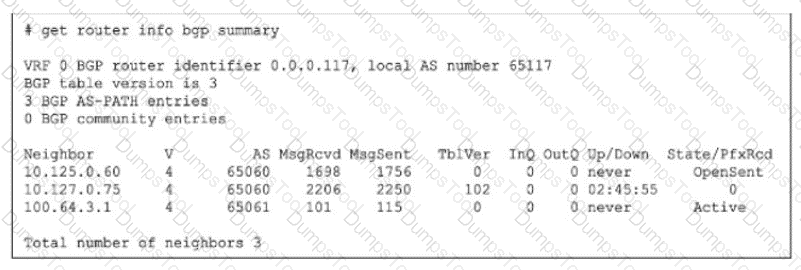
What is the most likely reason that the local FortiGate is not receiving any prefixes from its neighbors?
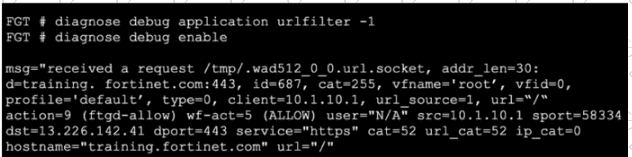
Refer to the exhibit, which shows the output of a real-time debug. Which statement about this output is true? (Choose one answer)
Which three common FortiGate-to-collector-agent connectivity issues can you identify using the FSSO real-time debug? (Choose three.)
What are three characteristics of the provisioning templates available on FortiManager? (Choose three.)
Refer to the exhibit, which shows the output of diagnose sys session stat.
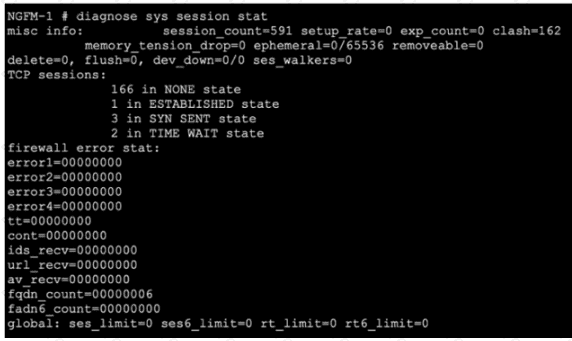
Which statement about the output shown in the exhibit is correct?
Refer to the exhibit.
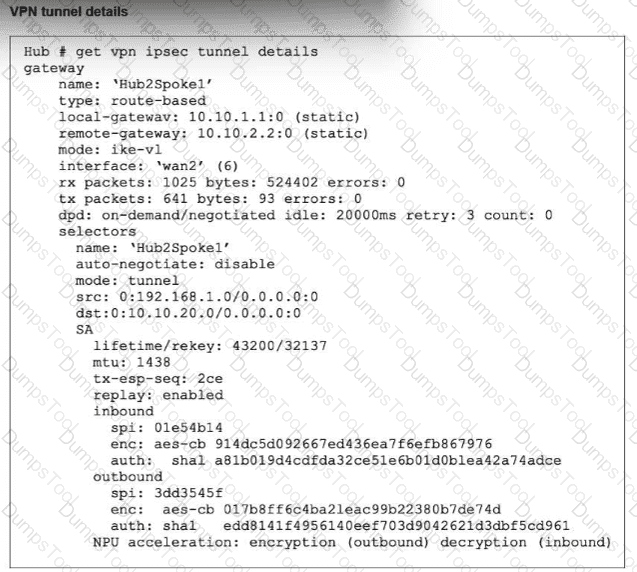
Partial output of the get vpn ipsec tunnel details command is shown. Based on the output, which two statements are correct? (Choose two.)
Refer to the exhibit.

The output from a collector agent log is shown. The collector agent is showing the status of a workstation as Not Verified. What are two common causes for this message? (Choose two.)
Refer to the exhibit, which shows one way communication of the downstream FortiGate with the upstream FortiGate within a Security Fabric.
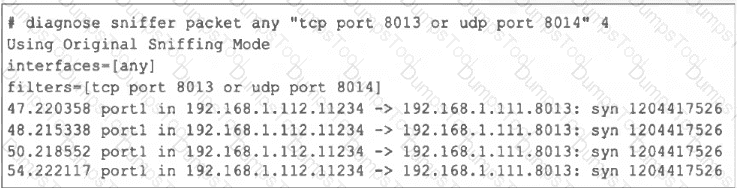
What three actions must you take to ensure successful communication? (Choose three.)
Refer to the exhibit.
Partial output of a real-time OSPF debug is shown.
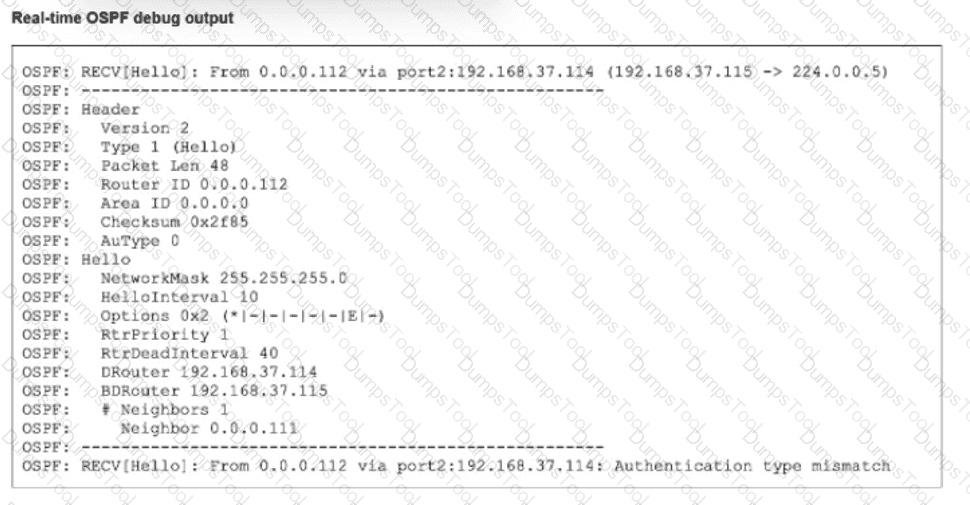
Which two reasons explain why the two FortiGate devices are unable to form an adjacency? (Choose two.)
Refer to the exhibit.
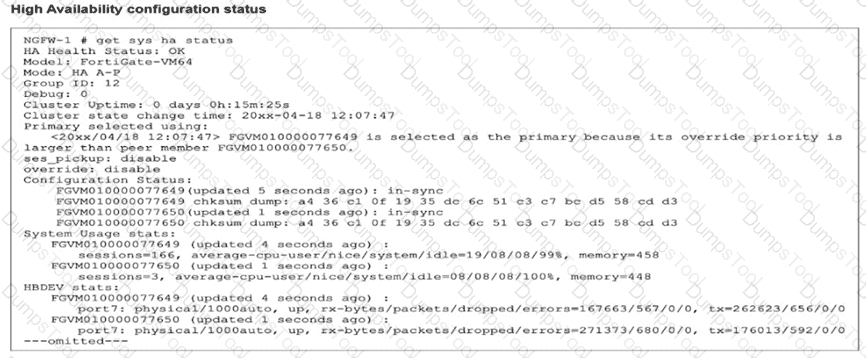
Which two statements about the output are true, considering NGFW-1 and NGFW-2 have been up for a week? (Choose two.)
Refer to the exhibit.
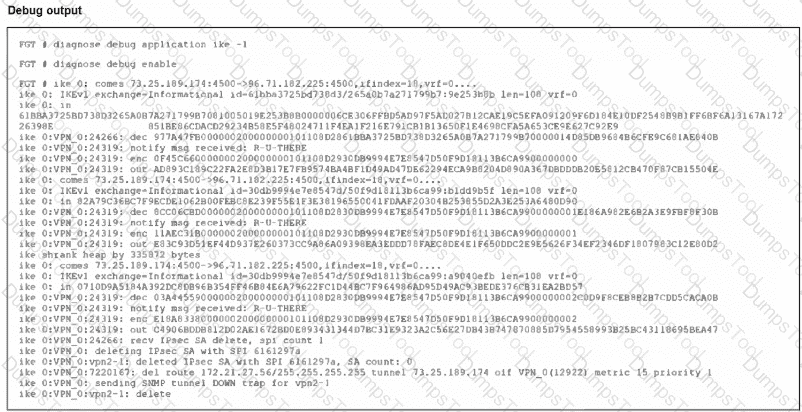
An IPsec VPN tunnel is dropping, as shown by the debug output.
Analyzing the debug output, what could be causing the tunnel to go down?

TESTED 24 Oct 2026